









You have two items in front of you. They look almost the same, but one will fit your life better. How do you pick the right one without guessing?
A side by side product comparison is the simplest way to decide. Put the two items next to each other, check the same facts for both, score only what matters to you, and then choose. This guide shows you how to do it in about ten minutes, in any shop or on any website.
1. What Is a Side by Side Product Comparison?
It means you compare similar items next to each other, fact by fact, instead of trying to remember what you saw on each page.
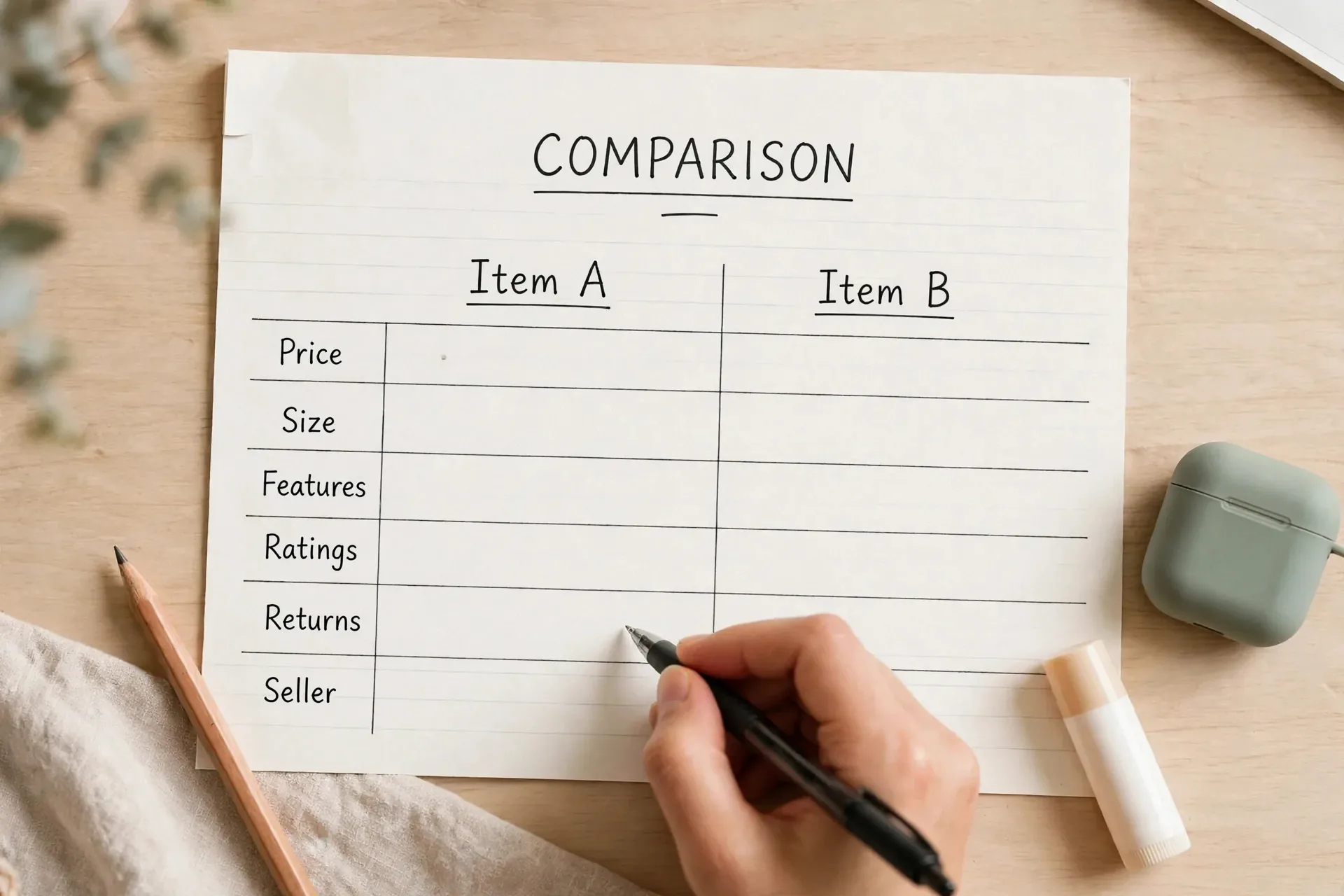
Picture two columns: Item A on the left, Item B on the right. Each row is one fact: size, main job, what is in the box, and full cost. When facts sit next to each other, differences jump out, and you stop being swayed by a bright photo.
This works for bottles, bags, headphones, and lamps, in a shop or when you compare products side by side online. A piece of paper or a phone note is enough.
2. Step 1: Pick Like-for-Like Items
First, make sure the two items are truly similar. This is the step most people skip.
Compare like with like. If one bottle holds much more water than the other, the bigger one may cost more. That does not make it better. It just makes it bigger.
So pick two items of the same type and about the same size, and ask: do they do the same main job for me? If yes, you can compare them fairly. If not, you are still shopping.
For example, Sara needs a school bag. She likes a small day bag and a large travel bag with wheels. Those are not the same kind of bag, so she picks two day bags instead, both made for school, and compares those. Two items are enough.
3. Step 2: Check the Same Facts for Both
Make your note sheet: Item A in one column, Item B in the other. Then fill in the same rows for both.
Start with size and fit. Will it fit your space, your bag, or your shelf? A bottle that does not fit your bag holder will annoy you every day. Next, check the main job: the one thing you need this item to do well. Extra features should not beat the main job.
Then check what is included, and whether you will need extra parts later. Is it easy to clean, carry, and use every day? Finally, check the full cost, not just the first price you see. When you compare prices on similar products, look for delivery costs and extra parts. One item can look cheaper and still cost more in the end.
4. A Simple Comparison Table You Can Copy
Here is an example table comparing two similar school bags. Your own table will have your own items, but the shape stays the same.
| Fact | Item A | Item B |
|---|---|---|
| Size and fit | Shelf + laptop sleeve | Shelf, no sleeve |
| Main job | Books, lunch, bottle | Books, lunch, bottle |
| What is included | Bag + small pouch | Bag only |
| Daily use | Wipes clean, padded straps | Wipes clean, thinner straps |
| Full cost | Price + delivery shown | Price + delivery shown |
| Returns | Check before you buy | Check before you buy |
This table does not say which bag is “best” for everyone. It shows where they differ, so you can decide what matters to you. The table gives you facts. You give it your priorities.
5. Step 3: Score Only What Matters to You
Now turn facts into a decision. Pick three facts that matter most, and score only those.
For a school bag, Sara picks fit, comfort, and full cost. For each fact, she gives the better item one tick. The item with more ticks wins.
Do not score ten things. If you score everything, unimportant extras can beat the one thing you actually need. Write your three top facts down before you score, then stick to them.
When you compare electronics side by side, the same rule holds. Two similar headphones may differ in battery life, fit, and controls. Pick the three that shape your daily use, and let the rest be a bonus.

6. Step 4: Decide, and Check the Small Print Before You Buy
Once your scores are in, the choice is usually clear. But do not rush past the last checks. Read the return details. Can you return the item if it does not fit or feel right? How long do you have, and who pays for the return? A fair return policy matters most online, where you cannot hold the item first.
Also read a few reviews, good and bad, and look for repeated points. One review alone does not tell the whole story, but a pattern does. Then ask: will I be happy using this every day?
7. A Fair Look: What This Method Does Well, and Where to Be Careful
What works well. This method is simple, fast, and honest. It stops you from comparing a big item with a small one, or a full set with a single item, and calling that fair. It puts facts next to each other, so you can see real differences. It also keeps price in its place: important, but not the only thing that counts.
Who it suits. It suits anyone stuck between two similar items, especially when they look alike in photos.
Where to be careful. A side-by-side check is only as good as the facts you put in it. If you skip a row, or guess a size, the result can mislead you. It also cannot tell you how an item feels, or how it lasts after months of use. That is why reviews and return details still matter.
Who it may not suit. For a complex or safety-related purchase, a simple table is not enough on its own. Use it to narrow your choice, then ask an expert.
8. Common Mistakes to Avoid
- Comparing different sizes or types. Fix your pair first, so both items do the same main job.
- Only looking at price. The cheapest item can hide a smaller size, fewer items in the box, or a harder return process.
- Trusting one photo or one review. Photos can hide size. Check the details and look for repeated points in reviews.
- Forgetting what is included. Check the box contents for both items before you compare costs.
- Scoring everything. Score your top three facts first, or extras will beat your main need.
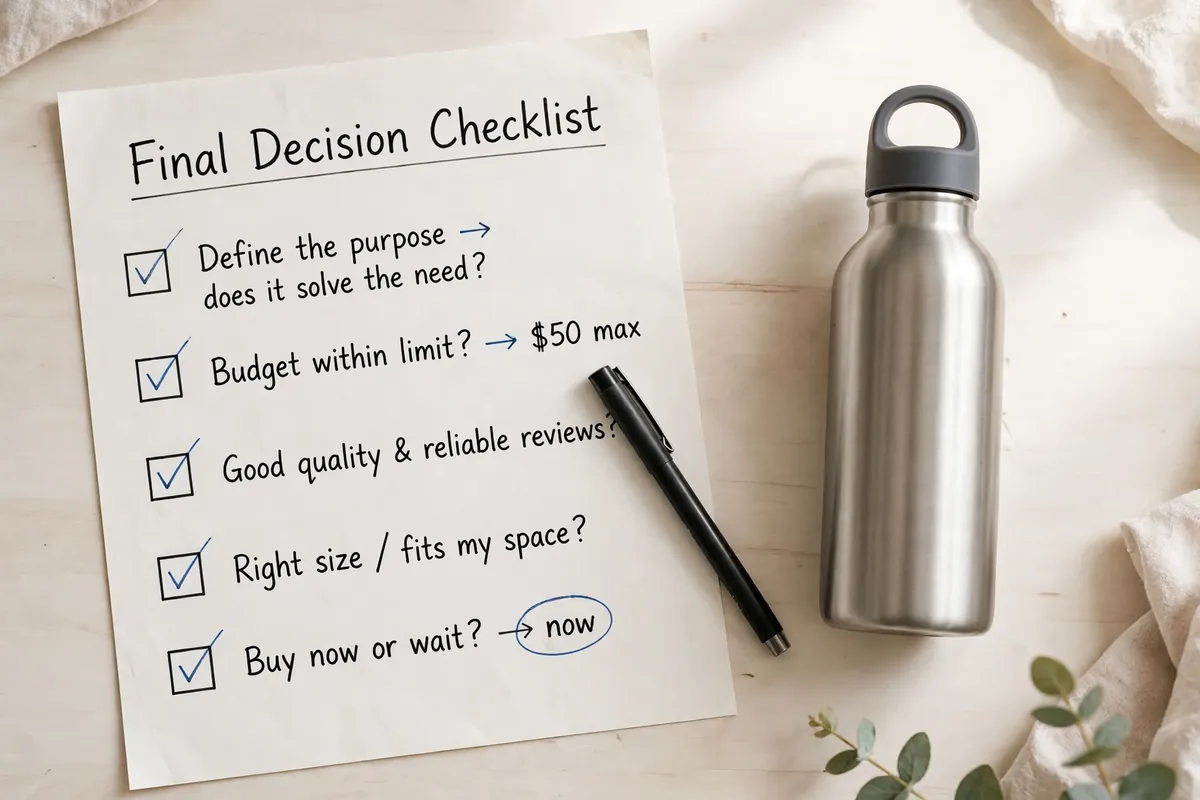
Quick Checklist Before You Decide
- Same type and size, two items only.
- Same facts checked for both, row by row.
- Size, main job, contents, and full cost checked.
- Only my top three facts scored.
- Return details checked, mixed reviews read.
- Best daily fit picked, not just the cheapest one.
If you can tick all six, you can decide with much more confidence.
Our Experience and Advice: Read This Before You Trust Any Comparison
This guide is built from a simple, practical habit: lining up similar items, checking the same facts, and letting your own needs decide, rather than trusting a headline or a single photo. That habit works in shops and online. But no guide can see the exact items you are looking at, and details such as size, contents, and return rules can change over time.
So before you buy, still check the page or label at the time you read it, and confirm size, contents, and returns for yourself. Your own final check makes that decision safe.
Frequently Asked Questions
What is a side by side product comparison?
It is a way to compare similar items next to each other, fact by fact, in two columns, checking the same facts for both, so differences are easy to see.
How do I compare similar items fairly?
Pick two items of the same type and size, then check the same facts for both.
Is the cheapest similar item always the best choice?
No. A lower price can hide a smaller size, fewer items in the box, or extra costs.
Pick two like-for-like items. Check the same facts for both. Score what matters to you. Then choose the one that fits your life best.