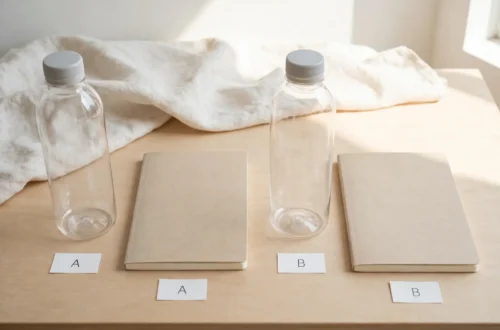









Product comparisons are simply a careful way of choosing between two or more products before you spend your money. Instead of picking the first one you see, or the one with the brightest advert, you look at each option side by side and ask one plain question: which one fits my life best?
That is the whole idea. A good comparison does not seek the “best” product in the world; it seeks the best fit for you, your routine, and your budget.
This guide brings the method together in one place: what a fair comparison looks like, how to compare features, quality, price, and reviews, and how to use the side-by-side method. It also points you to our fuller guides for special cases, like shopping on Amazon and comparing tech products.
What Product Comparison Means: Comparing Like With Like
A product comparison means placing similar products next to each other and judging them by the same measures. The key rule is simple: compare like with like.
A kettle should be compared with other kettles, not with a coffee maker. A pair of walking shoes should be compared with other walking shoes, not with dress shoes. When the products are the same kind of thing, the differences become clear. When they are different kinds of things, the comparison turns into a mess, because each one is made for a different job.
Start by writing down what the product must do for you on a normal day. If you make tea twice a day, you need a kettle that is easy to lift, fill, and clean. Once you know the job, you can ignore extras that sound exciting but do not help you.

How to Compare Two Products Fairly
Fair comparison rests on four things: features, quality, price, and reviews. Look at all four, not just one. A product can have many features and still feel poor in daily use, and a cheap product can cost more in the end if it breaks early.
Start with features that matter to you
A feature is simply something a product can do. Read the feature list slowly and mark only the ones you will really use. Ask yourself: will I use this every week, or only once? If the answer is “only once,” it should not decide your choice.
Size, weight, ease of use, and cleaning count too. A heavy item that is hard to store can become a daily annoyance.
Check quality in plain ways
Quality is hard to judge from a photo. Read the description for the materials used, check whether the maker explains how to care for it, and read what any warranty actually covers. A clear, honest description is a good sign; vague words are not. If you can, hold the product in a shop first.
Compare price with the whole cost in mind
Price is not just the number on the tag. Add in parts, refills, or delivery, and think about how long the product may last. A higher price can be fair if it lasts longer, while a low price can be a poor deal if it needs replacing soon. Compare full costs, not just headline prices.
Read reviews the careful way
Reviews help only if read with care. Look for people who describe real use over days or weeks, not just the first day. If many different people mention the same strength or problem, that pattern matters more than one excited or angry review. And a complaint about something you do not care about should not scare you off.

The Side-by-Side Method
The side-by-side method is the easiest way to keep a comparison fair. You put the options next to each other and check them against the same list, one row at a time, so no product is judged on a different standard.
Keep it simple. Pick two or three options at most, write down what matters to you — size, ease of use, materials, warranty, full cost — and fill in each option honestly, leaving a blank where you do not know. A blank is honest; a guess is not. Then ask which option fits your daily life best.
For a fuller walkthrough with worked examples, see our Side-by-Side Product Comparison Guide.

A Simple Table for Comparing Two Products
Use this table as your own checklist. Copy the rows, fill in each column, and leave a row blank if you cannot find a fair answer yet.
| What to compare | What it means in plain words | Ask yourself |
|---|---|---|
| Main job | What it must do for you every day | Does it do my main job well? |
| Features you will use | Functions you will really use each week | Which features matter to me? |
| Quality and materials | What it is made of, and how well built | Will it hold up to everyday use? |
| Ease of use and care | How simple it is to use, clean, and store | Can I look after it easily? |
| Full cost | Price plus extras, refills, or delivery | What will it cost over time? |
| Warranty | What the maker promises if things go wrong | What is covered, and for how long? |
| Reviews pattern | What many real users say over time | Do users mention the same strengths or problems? |
| Fit for your life | How well it suits your home and routine | Does this fit my day? |
When the table is filled in, the choice often becomes clear. If two options still look close, go back to your main job: the product that does it best, in the simplest way, is usually the right pick.
Comparing on Amazon
Some places need a little extra care. If you are shopping on Amazon, pages can be long and busy, with many sellers and similar listings. Our guide How to Compare Products on Amazon explains how to read those pages calmly and check seller and review details before you decide.
Comparing Tech Products
Tech products need extra care too, because their descriptions are full of technical words. Our Technology Product Comparison Guide explains screen, battery, storage, weight, and ports in plain words, so you can compare phones, laptops, tablets, and headphones without getting lost. In both cases, the method stays the same.
An Honest Look at Comparing Products This Way
Comparing products this way takes a little more time up front, but it often saves trouble later.
What works well: it stops impulse buying, because writing things down takes power away from a flashy advert. It keeps the choice personal, judging by your own daily life rather than what is popular, and it makes trade-offs clear, so you can see what you gain and give up with each option.
What to watch out for: it can feel slow at first, especially with too many products at once. Some details are hard to find, so you may leave a row blank until you learn more. Reviews can mislead if you read only the most excited or angry ones. And no comparison can tell you exactly how a product will feel in your hands; that still needs your own judgement.
Who this method suits: anyone spending carefully, anyone buying something they will use often, and anyone disappointed by a rushed purchase before.
Who it may not suit: it may feel like too much for a small, low-risk purchase you need today. Then a quick check of the main job and full cost is a sensible shortcut, not a failure.
A Note on How This Guide Was Put Together
This guide is based on general, everyday buying sense: comparing like with like, checking features against real use, reading reviews for patterns, and weighing the full cost rather than the headline price. It does not report tests of named products or claim any one product is best, because the right choice depends on your needs. Before you buy, still check the details yourself: the current description, warranty terms, and full cost including extras or delivery.
Frequently Asked Questions
How many products should I compare at once?
Two or three is usually enough. With more, the details blur and the choice gets harder. Narrow a long list by your main job first, then compare the final two or three properly.
What matters most when comparing products?
Your main job matters most. Start with what it must do every day, then check features you will really use, quality, full cost, and the pattern in reviews. A product that does your main job well usually beats one with many extras you will never use.
Should I trust reviews when comparing products?
Reviews help when read carefully. Look for patterns across many users and for reviews describing real, everyday use. Treat single extreme reviews with caution: a reviewer’s needs may differ from yours.
Is the cheapest product always the best deal?
Not always. The cheapest option can cost more over time if it needs replacing soon or needs many extras. Compare the full cost before you decide.
A Final Word
Good product comparisons are not about finding a perfect product. They are about making a calm, honest choice you can feel good about afterwards. Compare like with like, check features, quality, price, and reviews, and put the options side by side. Then pick the one that fits your daily life best.