









The short answer
A monthly household budget is a simple plan for your home’s money. You list what comes in, list what your home needs to spend, and give each kind of spending a place in the plan before the month begins.
Start with bills first, then food and household items, then transport and phone and internet. When the must-pay costs are covered first, the rest of the month feels calmer. A good budget for household items is one you can follow in a normal week, not one that falls apart by the second week.
What goes in a monthly household budget
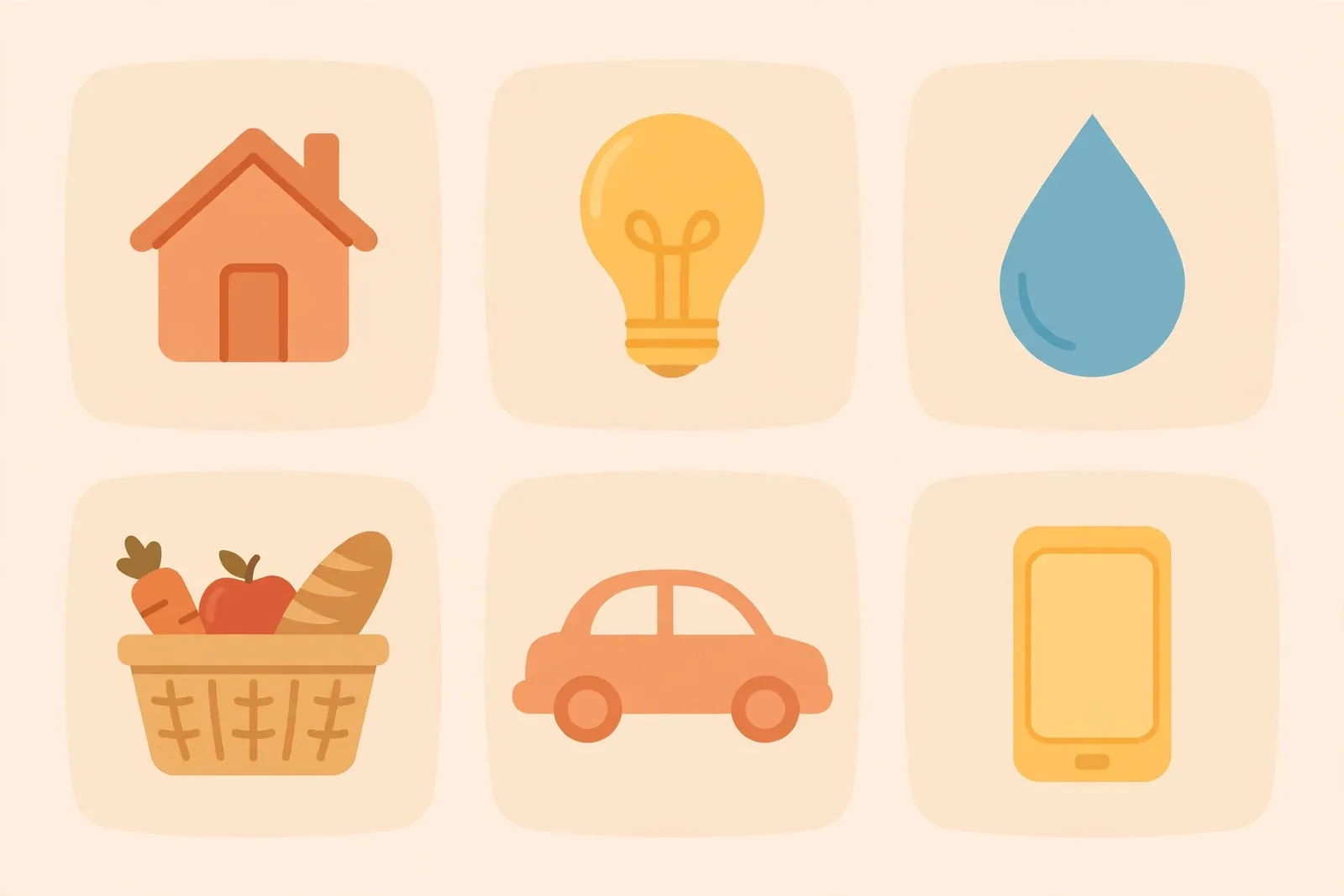
Think of your budget as a picture of your home, not a long list of rules. Housing comes first: the cost of living in your home. Then energy and water, which keep the lights on and the taps running. Then food and household items — groceries, cleaning supplies, and everyday basics you buy again and again.
After that comes transport, whether that means a car, fuel, or bus and train fares. Phone and internet services belong here too, because most homes rely on them every day. Finally, leave room for small, easy-to-miss costs: a school item, a broken light bulb, a small repair.
A simple way to build your list is to walk through your home in your mind, room by room. What does the kitchen need each week? What does the bathroom need? What keeps the home warm, lit, and clean? Write each group in plain words you will still understand a week later.
Budgeting bills first: fixed, variable, and yearly bills
Bills feel easier when you sort them before you plan around them. There are three kinds, and each one needs different attention.
Fixed bills stay about the same each month. Your housing cost and a steady phone plan are common examples. Because they rarely change, you can plan for them once and simply check them now and then.
Variable bills rise and fall. Energy, water, and food spending often fall here, because they change with the season, the weather, and how much your household uses.
Yearly bills arrive only once or a few times a year, but they still belong in a monthly plan. Yearly insurance and some subscriptions work this way. If you only think about them when they arrive, they feel like a shock. Note them in advance, and they become just another planned cost.
If you want a full list of the kinds of bills a home can have, start with this helpful list: List of Household Bills & Monthly Expenses.

| Bill type | How it behaves | Everyday example | How to plan for it |
|---|---|---|---|
| Fixed | Stays about the same each month | A housing payment or a steady phone plan | Note it once, then check it now and then |
| Variable | Rises and falls with use and season | Energy, water, and food spending | Compare with the same season, not only last month |
| Yearly | Arrives once or a few times a year | Yearly insurance or a subscription | Note the due date in advance so it never surprises you |
Household budget examples: single person and family shapes
No two homes have the same budget, and that is normal. What helps is seeing the shape of a budget, not a set of figures. This section describes shapes only — no amounts, because the right amount depends on your home, your area, and your stage of life.
A single person living alone usually has a simpler shape. Housing and energy may take a large share of attention, because only one person covers them. Food and household items are often lighter, with less cooking and laundry. The biggest win is often noticing small repeat costs — little subscriptions and everyday buys that quietly add up.
A couple often shares many costs: one home, one set of energy and water services, one internet connection. That sharing can make the shape feel lighter per person, but decisions are shared too. A couple’s budget works best when both people know the plan, even if only one person writes it down.
A family with children has the fullest shape. Food, laundry, water, and everyday household items all grow, because more people use them every day. School needs, clothes that children outgrow, and family transport add more groups. That does not mean a family budget is harder to control — it means it needs a clearer list.
To see how these shapes relate to the kinds of bills homes usually face, read this plain explainer: Average Monthly Household Bills Explained.
A monthly routine: list, track, adjust
A budget is not a one-time document. It is a short monthly routine, and it only takes three steps.
First, list. At the start of the month, write down your groups: housing, energy, water, food and household items, transport, phone and internet, small extras, and yearly bills due soon. Keep the list short and in plain words.
Second, track. During the month, note what you actually spend in each group. You do not need a fancy app — a notebook, a phone note, or a sheet of paper works fine. The point is to see the shape of your month while there is still time to steer it.
Third, adjust. At the end of the month, look at the list and ask: what went as planned, and what did not? Move a little room from a group that came in light to a group that ran heavy.

Now, what do you do when a bill is higher than planned? First, stay calm and check the basics. Was the bill estimated rather than read? Did a plan change? Was there a cold snap, guests, or extra use that explains it? Many high bills have a simple, normal reason.
If the bill is high for no clear reason, contact your provider and ask them to explain it in plain words. Ask what changed, and whether your plan still fits your use. Then adjust next month’s plan for that group, and pick one small habit change — fuller laundry loads, or lights off in empty rooms.
For the practical side of paying bills on time and keeping them organised, this guide walks through it step by step: How to Pay & Manage Household Bills.
A fair look: is monthly household budgeting right for you?
What works well: A monthly budget gives every cost a place before the month begins, so bills are less likely to surprise you. It also shows your real habits, which helps you make small, steady changes instead of sudden cuts.
Where to be careful: A budget that is too strict, too detailed, or built on wishes rather than real life can feel like a burden and get abandoned. If tracking every small item stresses you, simplify the list. Fewer groups, tracked loosely, beat a perfect list you never open.
Who it suits: Anyone who wants calmer months — a first-home renter, a single person learning to manage bills, a couple planning together, or a family trying to keep a busy home on track.
Who it may not suit: Someone whose income changes sharply from week to week may find a fixed monthly shape hard to follow at first. A shorter weekly check, with the same groups, often works better than forcing a monthly plan.
The honest verdict: monthly household budgeting is a tool, not a test. Use it to understand your home, adjust it as life changes, and keep it simple enough that you will still use it next month.
A note on how this advice was put together
This guide is based on general, everyday knowledge about how household money works: how fixed, variable, and yearly bills behave, how household shapes differ, and how a simple list-track-adjust routine helps a home stay organised. It does not quote any provider’s prices, and it does not claim any home should spend a particular amount, because prices, plans, and homes differ by place and change over time. Before you change a plan or make a big money decision, check your own bills, your plan terms, and your provider’s current information. If money is tight or a bill looks wrong, speaking with your provider or a trusted local advice service is a wise next step.
Frequently asked questions
What is a monthly household budget?
A simple plan that lists what your home spends in a month, grouped by kind — housing, energy, water, food and household items, transport, and phone and internet.
What should I put in a budget for household items?
The things your home uses again and again: groceries, cleaning supplies, and everyday basics. Keep them as one clear group so they are easy to track.
Should I budget bills first?
Yes. Plan fixed bills first, then variable bills, then yearly bills due soon, so the must-pay costs are covered before everyday spending begins.
What is the difference between fixed, variable, and yearly bills?
Fixed bills stay about the same each month. Variable bills rise and fall with use and season. Yearly bills arrive only once or a few times a year.
What if a bill is higher than I planned?
Check the basics first — an estimated reading, a plan change, or extra use in that season. Then compare with the same season before, ask your provider to explain anything unclear, and adjust next month’s plan.
Start small, and start this month
You do not need a perfect budget. You need a list you understand, bills planned first, and a short routine you will repeat. Write your groups down, track loosely, and adjust at the end.