







Price comparison simply means checking the price of the same thing in more than one place before you buy it. You look, you compare, and then you choose the option that gives you the best value for your money.
Why does it matter? Because the same item can cost very different amounts in different shops, and the first price you see is not always the best one. A few minutes of checking can save you money on almost everything you buy. Over a year, those small savings add up. You do not need special skills or maths. You just need a simple habit: pause, compare, then buy.
What Price Comparison Really Means
Price comparison is not about always buying the cheapest thing you can find. That is a common misunderstanding, and it can lead to bad buys. The cheapest option is not a bargain if it breaks quickly, does not do what you need, or costs extra to deliver.
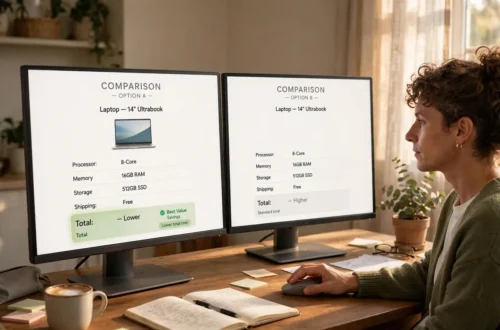
Real price comparison means comparing like with like. You check the same item, or items that are truly similar, and you look at the full picture: the price, delivery charges, return rules, warranty, and quality. A slightly higher price can be the better deal if it includes free delivery and an easy return.
Here is a simple example. Imagine you want a school backpack for your child. One shop sells it at a low price but charges a lot for delivery, and returns are hard. Another shop sells the same bag for a little more, but delivery is free and returns are easy. The second shop may be the smarter buy, even though its headline price is higher. That is why comparing means looking past the first number you see.
How to Compare Prices Online, Step by Step
Shopping online makes price comparison much easier, because you can check several shops without leaving your chair. Here is a simple method you can use every time.
Step 1: Be clear about what you want. Write down the exact item, including its size or model if that matters. This stops you from comparing two different things by mistake. A small size and a large size are not the same product, even if the name looks similar.
Step 2: Check more than one shop. Look at two or three trusted shops that sell the same item. Do not stop at the first result. Prices can differ, and one shop may have an offer the others do not.
Step 3: Add up the full cost. Add delivery charges to the price. If one shop looks cheaper but adds a big delivery fee at checkout, it may not be cheaper at all. Check this before you decide, not after you have paid.
Step 4: Check the seller and the return policy. Make sure the seller looks trustworthy, and read the return rules in plain words. Can you send the item back if it is wrong or faulty?
Step 5: Decide, then buy once. Once you have compared, pick the best overall option and buy it. Do not keep searching for hours after you have found a good deal. At some point, your time is worth more than a tiny extra saving.

If you want a deeper walkthrough of this online method, read How to Compare Prices Online.
Using Price History and Trackers
Sometimes the question is not just where to buy, but when to buy. Prices go up and down over time. An item that looks expensive today may have been cheaper last month, and it may drop again soon. Price history shows you that story.
A price history tool records how an item’s price has changed over time and shows it as a simple chart. When the line is low, the item was cheaper. When it rises, it was more expensive. That chart helps you answer a useful question: is today’s price a good one, or just an average one?
Trackers take this one step further. You set an alert for an item you want, and the tracker tells you when the price drops. That is helpful for things you do not need right away. Instead of checking the price every day yourself, you let the tool watch it for you.
But keep one thing in mind. A price chart tells you about the past, not the future. A low price in the past does not guarantee the price will drop again. Use history as a guide, not a promise. If you need the item now and the price is fair, buying now is fine. If you can wait, watching for a drop is smart.
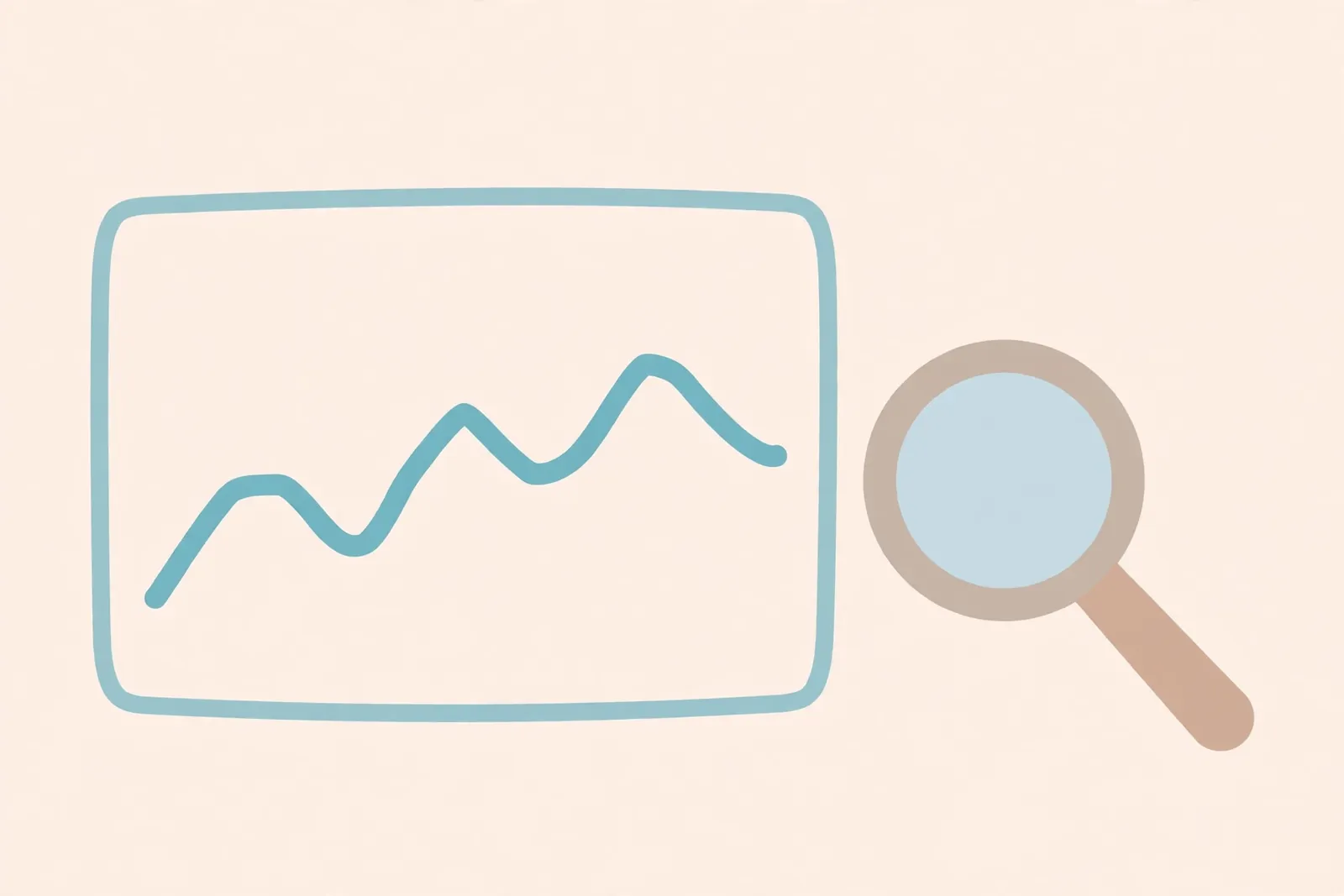
For a full guide to setting up alerts and reading price charts on the world’s biggest online shop, see Amazon Price History Trackers: How to Track Prices.
Tools and Websites That Help You Compare
You do not have to do all the checking by hand. Comparison tools and websites gather prices from many shops and show them together, so you can see your options at a glance. That saves time, especially when you are comparing something with many sellers.
A good comparison tool does three things well. It shows the same item across different shops, so you are comparing like with like. It shows the full cost, including delivery, where possible. And it is clear about where its information comes from, so you can trust what you see.
Start simple. Pick one or two tools you find easy to use, and learn them well. You do not need ten different tools. One good tool, used with care, beats five confusing ones. Always double-check the final price on the shop’s own page before you pay, because tool listings can sometimes be out of date.
If you would like a list of helpful options to try, our guide to Best Price Comparison Websites & Tools walks through the kinds of tools available and how to use them wisely.
How to Tell a Real Deal from a Fake Discount
This is the skill that protects your money the most. Not every big discount is a real saving. Some sellers raise the price first, then cut it back down and call it a sale. The discount looks huge, but the final price is nothing special.
Watch for these warning signs:
- A huge discount with no history behind it. If you have never seen the item at that higher price anywhere else, be careful.
- Pressure to buy right now. Countdown timers and “only a few left” messages can be real, but they are also used to rush you. A genuine deal will still make sense after you take a breath and check.
- A price far below every other shop. If one seller is dramatically cheaper than all the rest, ask why. It could be a different version of the item or a seller with poor reviews.
- Hidden extras at checkout. If delivery or fees appear only at the last step, the deal was not as good as it looked.
A real deal passes a simple test. Check the price in at least one other place, check the price history if you can, and read the full cost, not just the headline. If it still looks good after those checks, it probably is a real deal. If it falls apart under checking, walking away is the smart move.

A Simple Comparison: Comparing vs Not Comparing
| What you do | What usually happens | What it costs you |
|---|---|---|
| Buy the first price you see | Fast, but you may pay more than you need to | Money, and the chance to find a better option |
| Check two or three shops | You find the better overall value, including delivery | A few extra minutes |
| Check price history too | You learn if today’s price is fair or high | A little more time, but a clearer decision |
| Use a tracker and wait | You may catch a real price drop on something you do not need urgently | Patience, but no daily checking |
The trade-off is honest: comparing takes a little time, while not comparing saves time but often costs money. For small everyday items, a quick check is enough. For bigger buys, the extra minutes are well worth it.
Who This Method Suits — and Who It May Not Suit
Who it suits: This way of shopping suits almost anyone who wants to stretch their money further: families buying everyday items, students on a tight budget, and anyone planning a bigger purchase like a phone or furniture. It also suits patient shoppers who can wait for a price drop instead of buying on impulse.
Who it may not suit: If you need something urgently, such as a replacement for a broken item today, a quick check of one or two trusted shops is enough. It also may not suit every tiny purchase. Checking five shops before buying a small everyday item can waste more time than it saves. Match your effort to the size of the purchase: quick checks for small things, careful comparison for big ones.
Pros: Helps you avoid paying more than you need to; shows you what a fair price looks like; protects you from fake discounts; builds a money-saving habit you can use for life.
Cons: Takes extra time, especially at first; can lead to endless searching if you never decide; tool listings can sometimes be out of date, so a final check is still needed; waiting for a price drop does not always pay off.
A Note on How This Advice Was Put Together (E-E-A-T)
This guide is based on widely used, everyday shopping practice: comparing like with like, adding up the full cost including delivery, checking seller and return details, and using price history as a guide to whether a price is fair. It does not promise that any particular shop, tool, or price will be the cheapest, because prices change often and vary by place and time. Before you buy, please still check the final price, delivery cost, and return policy on the seller’s own page yourself, and make sure the item matches exactly what you need.
Frequently Asked Questions
What is a price comparison?
It is the simple habit of checking the price of the same item in more than one place before you buy, so you can choose the best overall value.
How many shops should I check?
For most purchases, two or three trusted shops are enough. For a bigger purchase, checking a few more is worth the time.
Is the cheapest price always the best deal?
No. Delivery charges, return rules, quality, and warranty all matter. The best deal is the best full package, not just the lowest headline price.
How can I spot a fake discount?
Check the price somewhere else, look at the price history if you can, and read the full cost at checkout. If the saving disappears under checking, it was not a real deal.
The Bottom Line
Price comparison is a small habit with a big payoff. Pause before you buy. Compare like with like. Add up the full cost. Check the history when it matters, and do not trust a discount label on its own. You do not need to be perfect at it. Even a quick check puts you ahead of buying blind. Start with your next purchase, and let the habit grow from there.