








Smart shopping is not about buying the cheapest thing every time. It is about buying the right thing, without regret afterwards. In short: plan first, compare, then buy. That is the whole idea, and it works for a weekly grocery shop just as well as for a bigger purchase you have thought about for a while.
Think of it this way. A rushed shop starts in the store. A smart shop starts at home, before you leave. You know what you need and what you already have. The rest of the trip is just following that plan, with room for the odd treat you truly enjoy.
What Smart Shopping Really Means
Smart shopping means slowing down at the right moments. Not every moment — just the ones that save you trouble later. Before you buy, ask a few plain questions. Do I need this now? Do I already have something like it? Have I checked another option? If the answers are clear, you can buy with confidence. If they are not, wait. That pause is often the smartest part.
It also means being honest about what matters to you. For one person, that might be food that lasts the week without waste. For another, it might be a product built to last. There is no single right answer.
Plan First: Start With Your Week
A plan does not have to be long or perfect. Look at the days ahead. Which meals will you cook? What do you need for breakfast and lunch? Which days will you be out, so you do not buy fresh food that will sit unused?
Write those needs down, even in rough form. A short plan keeps you from wandering the aisles, and it makes the whole shop much calmer. For a fuller walk-through, read Grocery Shopping Tips: How to Shop Smarter.
Check the Pantry Before You Write the List
This step takes only a few minutes, and it saves more trouble than almost any other. Open your cupboards, your fridge, and your freezer. Note what you already have, what is running low, and what you do not need this week at all.

It is surprising how often we buy a second jar of something we already own, simply because we never looked. A pantry check stops that, and it helps you build meals around food you already have, so less goes to waste.
Now write your list from what is missing, not from memory alone. Cross things off as you go, so you can see at a glance what is left.
Apps and Smart Lists That Help
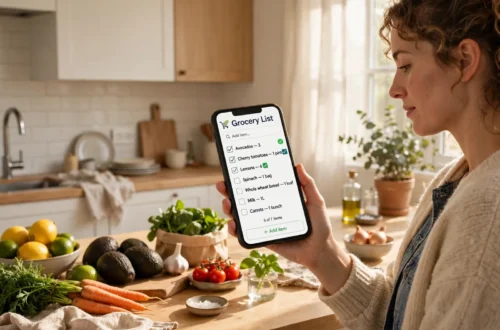
You do not need a fancy app to shop smart, but a simple list app can make the habit easier to keep. Many people use the notes app already on their phone. Others like a shared list, so everyone in the house can add an item as soon as they notice it is running low.

A shared list has one clear strength: it is always up to date. If someone finishes the last of something, they add it straight away, instead of trying to remember it later.
Keep the tool simple, though. If an app takes longer to open than a paper list, it is not helping. The best tool is the one you will actually use on a busy day. For ideas on choosing one, see Best Grocery Shopping Apps & Smart Lists.
Compare Before You Buy
Comparing does not mean spending hours on every item. It means taking a moment, for the things that matter, to look at more than the first option you see — a different size, brand, or store. For bigger buys, read the details and think about how you will actually use the product day to day.

Here is a useful rule: spend your comparing time where it counts. For everyday items you buy often, a quick check is enough. For something you will use for a long time, take a little longer. A short pause now can save a return, a replacement, or a cupboard full of something nobody enjoys.
This guide stays general on purpose. Our price comparison and product comparison guides cover comparing in detail, step by step, without repeating it here. Think of this post as the starting point, and those guides as the next step when a purchase deserves closer attention.
At a Glance: Rushed Shopping vs Smart Shopping
| Rushed shopping | Smart shopping | |
|---|---|---|
| Before you leave | No list, no plan | Short plan and a quick pantry check |
| In the store | Guided by what catches your eye | Guided by your list, with room for a treat |
| Before you buy | First option that looks fine | A quick comparison where it matters |
| At home | Duplicates and forgotten items | Food and products that fit your week |
| Feeling afterwards | Often regret or waste | Usually calm, even if not perfect |
A Fair Look: Does Smart Shopping Suit Everyone?
Smart shopping suits most everyday shoppers, especially anyone whose cart often grows beyond the plan, or who keeps finding duplicates at home. It is gentle, not strict: you are not cutting out treats, just adding a little structure.
There are limits, though. On a very rushed day, or when a store is out of stock, even a good plan will bend. If you already plan, list, and compare with ease, a deeper comparison guide may be your better next step.
Who it suits: beginners, busy households, and anyone who wants calmer, less wasteful shopping. Who it may not suit: shoppers who already have a settled system that works, or anyone buying a single urgent item where speed matters more than planning. On balance, it is a kind and practical starting point, not rules you must follow perfectly.
Why You Can Trust This Advice
This guide is based on common, everyday shopping habits many shoppers recognise: planning meals, checking what is already at home, keeping a simple list, and pausing to compare before buying. It does not rely on a particular store, tool, or test result, and it makes no promise about a particular outcome. Every household shops differently, so try one habit at a time and keep the ones that fit your life. Before a bigger purchase, still check the product details and return terms, because a general guide cannot know your home or your budget.
Frequently Asked Questions
What is smart shopping in simple words?
Smart shopping means planning first, comparing where it matters, and then buying. You check what you need and what you already have, keep a list, and pause before you buy, so you end up with things you will actually use.
How do I start smart shopping as a beginner?
Start small. Plan a few meals, check your pantry, and write a short list before your next shop. Do not try to change every habit at once. One habit that sticks is worth more than a perfect system you drop after a week.
Do I need an app to shop smart?
No. A paper list works just as well. An app helps mainly if you want a shared list that everyone in the house can update, or if you always have your phone with you and a paper list gets lost.
Is smart shopping the same as buying the cheapest option?
No. A smart choice fits your needs, lasts as long as you need it to, and does not go to waste. Sometimes that is the lower-cost option, and sometimes it is not.
What should I do when my shopping still goes off plan?
Do not worry — it happens to everyone. A rushed day or a store out of stock can throw any plan off. It helps to know the common traps in advance, so you can spot them next time: see Grocery Shopping Mistakes to Avoid.
Start With One Small Habit
You do not need a new system or a perfect plan to shop smart. Pick one habit: check the pantry, write a short list, or pause before you buy. Try it on your next shop.