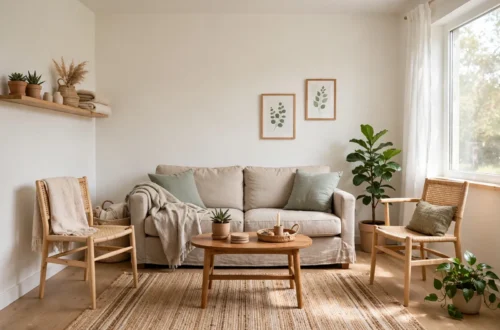









Yes, you can find a good, cheap sofa or sectional on a budget. But the best buy is not always the lowest price. It is the sofa that fits through your door, fits your room, feels good every day, and stays firm. This guide covers sofas and sectionals only — size, shape, frame, cushions, fabric, and delivery.
1. Measure First, Shop Second
Most sofa mistakes start before shopping. Someone loves a big sectional in a showroom, brings it home, and finds it blocks a door or leaves no space to walk past the table. Ten minutes of measuring can prevent that.
Measure the wall where the sofa will go, leaving a little space on each side. Then measure the path it must travel: the front door, hall doors, stairs, turns, and the lift, if you have one. Compare your door sizes with the sofa’s packaged size, not just its size when set up. Some sofas arrive in parts, which helps in a tight flat. Others arrive in one big piece, which can be a problem in a narrow hall.
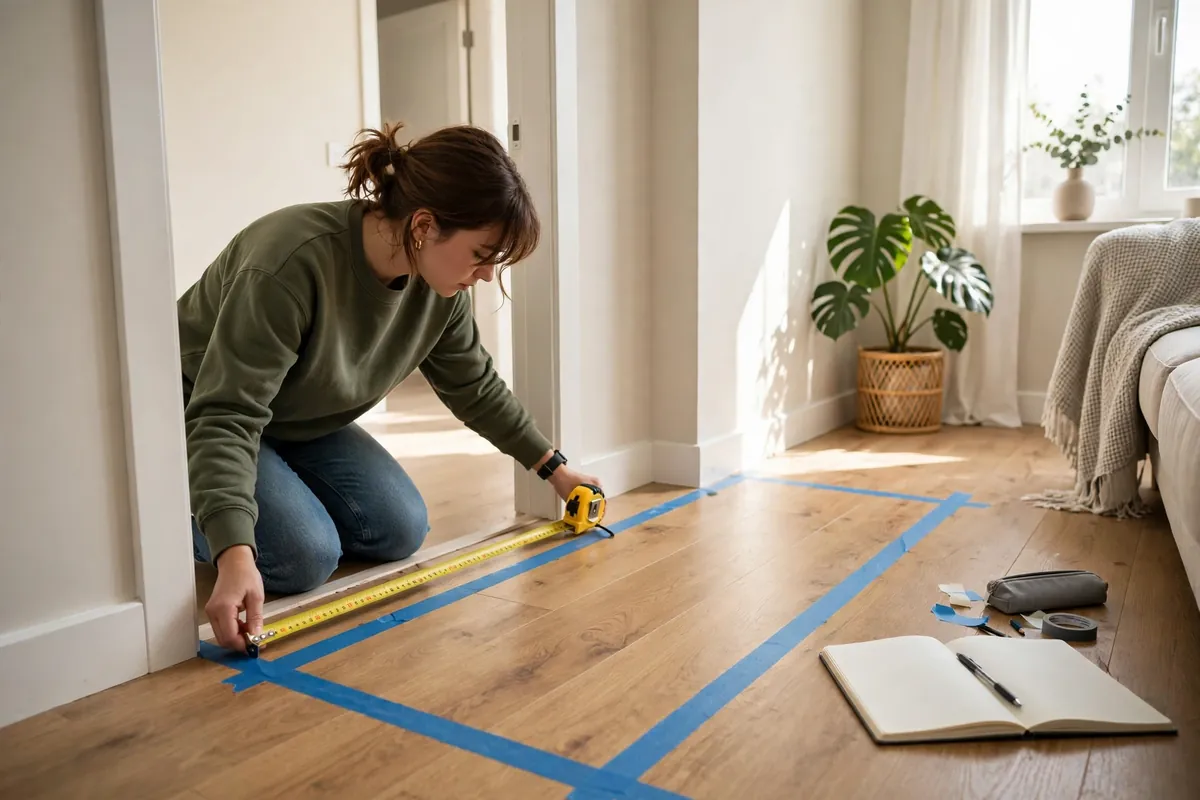
Keep these numbers on your phone. If a sofa is longer than your wall space, or wider than your door, it is not a bargain, however nice it looks. Also think about daily use: TV lounging, guests, kids, or pets all change the shape you need.
2. Straight Sofa, Loveseat, or Sectional?
A straight three-seat sofa suits a medium or large room. A loveseat — a smaller two-seat sofa — suits a small room or studio, and paired with a chair it often gives more useful seating than one oversized sofa. A sectional turns a corner and gives you a long seat to stretch out on, often with a chaise, the long part you rest your legs on. But it takes more floor space and can be hard to move later. Check which side the chaise should be on: a chaise on the wrong side can block the way into the room.
| Sofa type | Best for | Watch out for |
|---|---|---|
| Straight three-seat sofa | Medium or large rooms; everyday family seating | Can be too long for a small wall |
| Loveseat (two-seat sofa) | Small rooms, studios, or a second seating spot | Not enough seats for a large group |
| L-shaped sectional | Corner rooms; people who like to stretch out | Takes more floor space; hard to move |
| Sectional with chaise | Long lounging; filling one open corner | Chaise on the wrong side can block a walkway |
| Sleeper sofa or sleeper sectional | Small homes that need a guest bed sometimes | Heavier to move; needs space to open |
Your room size and daily habits should decide.
3. How to Check Quality Without Paying More
Start with the frame. Sit down and shift your weight from side to side. It should feel solid, not wobbly or creaky. Next, press the cushions down and let go. Good cushions spring back to shape. Thin cushions that stay flat will soon look saggy. Covers that come off are a plus, because you can wash or replace them.
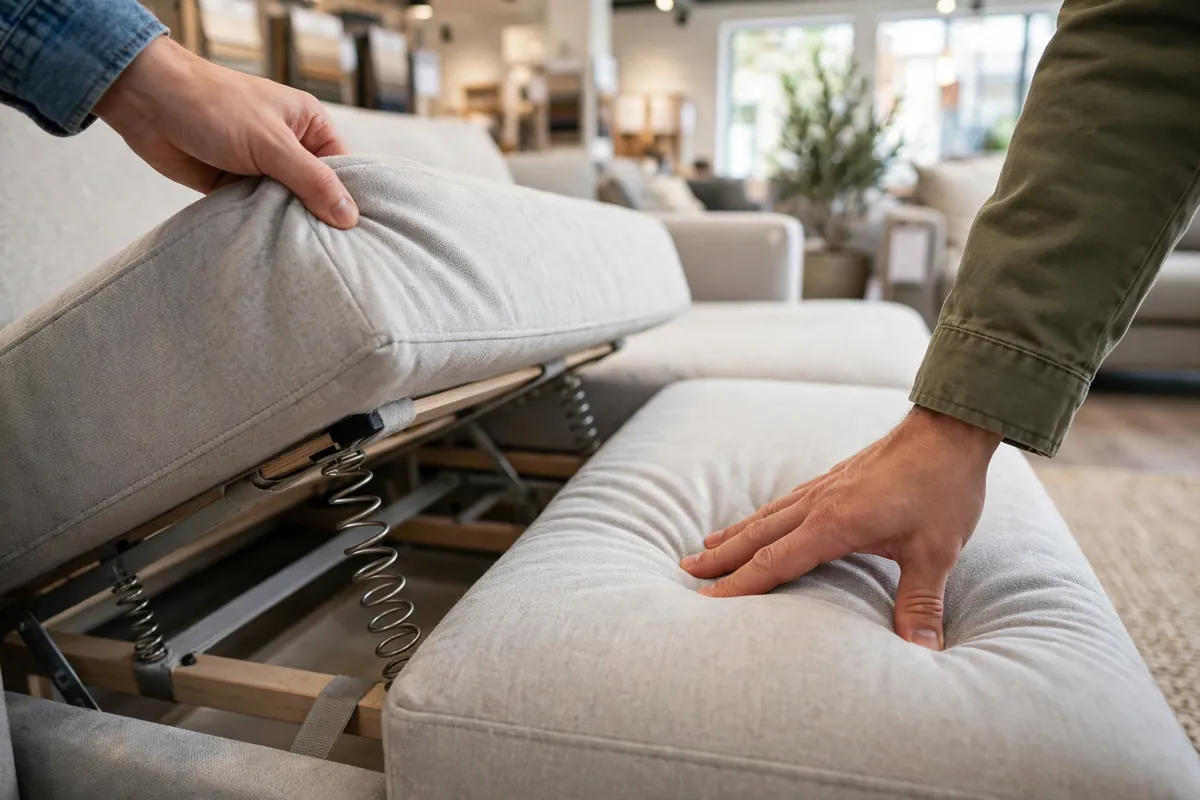
Then check the fabric, legs, and seams. Fabric should feel smooth and strong, not rough or very thin. A plain mid-tone fabric often hides everyday marks better than a very light colour. Legs should be firm and even, so the sofa does not rock, and seams should look neat, not pulled or loose. Sit as you sit at home. If you buy online, read buyer comments about comfort, and check return rules first.
4. Making a Sectional Work in a Corner
Put the long side along the longer wall, and let the chaise fill the corner, not the middle of the room. Leave a clear path to the door and to other seats. You should be able to walk past the coffee table without turning sideways.
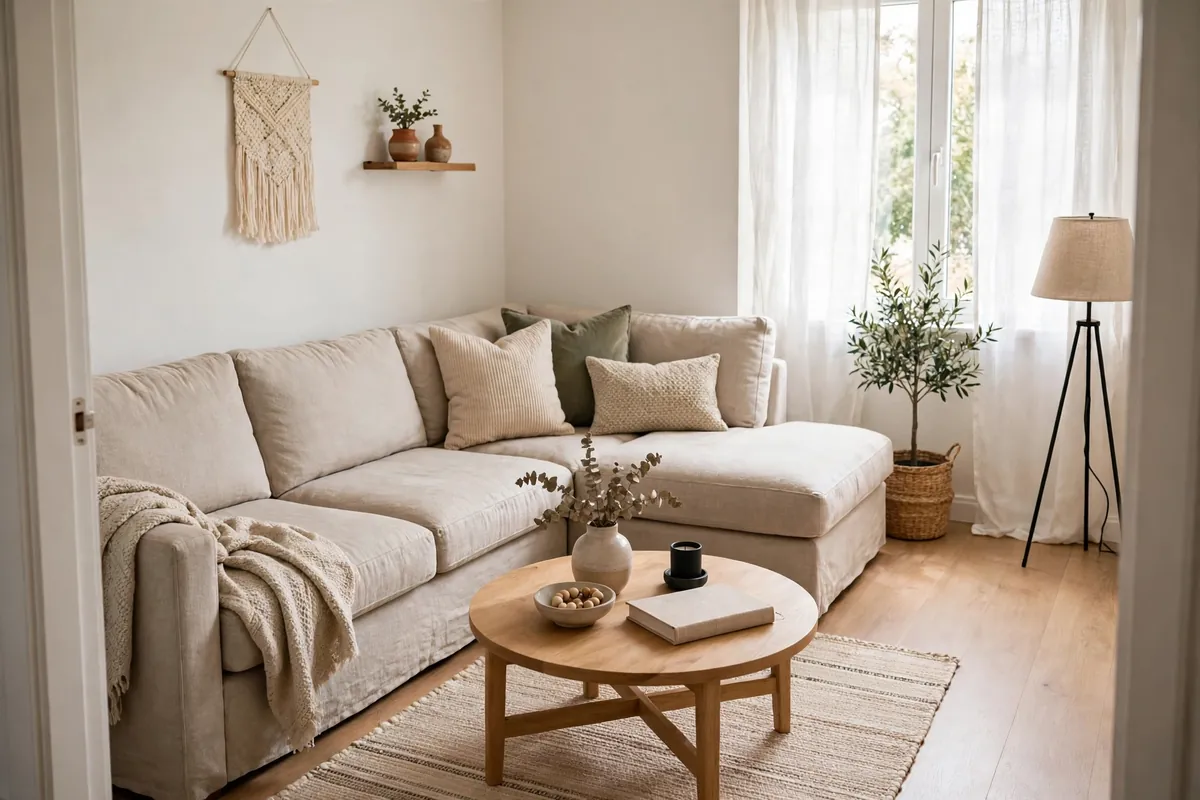
Try this test on paper first. Draw your room and the sectional to scale, with doors, the TV spot, and the walking path. If the drawing looks crowded, the real room will feel worse. Also ask how it arrives and whether assembly or old-sofa removal costs extra.
5. A Fair Look: Are Budget Sofas Worth It?
Here is an honest review of the budget sofa idea as a whole, not of one brand or model.
What budget sofas do well: A simple, well-chosen budget sofa can be very good value — a comfortable seat, a clean look, and money left for other needs. A plain sofa in a calm colour can be refreshed later with cushions and a throw. For a first home, a rental, or a room not used all day, a budget sofa often makes perfect sense.
Where to be careful: The risk is not the low price itself. It is a weak frame, thin cushions, or a size that does not fit. A sofa that sags in a few months or blocks your doorway is not a bargain, even if it cost little. Very soft cushions can feel great at first and then lose shape fast, so firmness matters more than first comfort alone.
Who it suits: Budget sofas suit first-time buyers, renters, small households, and anyone who wants a simple, comfortable seat without a big spend. Who it may not suit: If you need a sofa for heavy daily use by a large family, or want a piece to last many years unchanged, a very cheap, lightly built sofa may disappoint you. Waiting, saving a little more, or finding a well-kept secondhand sofa with a strong frame may be wiser.
6. Where to Find a Good Couch on a Budget
When people search for the best place to buy a couch on a budget, they usually mean: where can I find cheap couches that are still good quality? There is no single answer, because stock, delivery, and return rules change often. Compare types of sellers and judge each sofa on its own merits.
Outlets and clearance sections can be good for floor models, and you can often sit on the sofa first. Online shops give more choice, but you cannot test comfort, so size and return rules matter more. Secondhand sofas can be great value, but check them in person first. Compare the full cost too: delivery, assembly, and old-sofa removal can change the total. Prices change often, so check prices at the time you read this.
Our Experience Note: How This Advice Was Put Together
This guide is based on practical checks any shopper can repeat: measuring room and door, testing frame and cushions, comparing shapes, and reading delivery and return terms. It is not a lab test of one brand, and no one named sofa is best for everyone. Before you buy, still check the exact size, fabric care, delivery terms, and return policy, and sit on it if you can.
7. A Simple Buying Checklist
Step 1: Measure. Wall, doors, halls, stairs, and lift. Keep the numbers on your phone.
Step 2: Pick a shape. Straight sofa, loveseat, or sectional, based on room size and daily use.
Step 3: Check the build. Frame, cushions, fabric, legs, and seams. Sit as you sit at home.
Step 4: Check the layout. Draw the sofa in the room. Leave a clear walking path.
Step 5: Compare the full cost. Sofa price plus delivery, assembly, and removal, if needed.
Step 6: Read the small print. Return rules, damage policy, and warranty, before you pay.
Frequently Asked Questions
What is the best place to buy a couch on a budget?
There is no one best shop for everyone. Compare outlets, clearance sections, online shops, and well-checked secondhand sofas, and judge each sofa by fit, frame, cushions, delivery, and returns.
Should I buy a sectional or a straight sofa?
Buy a sectional if you have a corner to fill and a clear walking path. Buy a straight sofa, or a loveseat plus a chair, if your room is small or you may move soon.
How do I know if a cheap sofa is good quality?
Sit on it and shift your weight: the frame should feel solid, not wobbly. Press the cushions — they should spring back. Firm cushions, a solid frame, and neat seams are good signs.