









The short answer
When people talk about average monthly household bills, they mean a rough middle point. Imagine lining up many homes and looking at what they pay for housing, energy, water, food, transport, and phone and internet services. An average gives a general idea of what is common. It does not tell you what your home should pay.
Your bills depend on your home, the people in it, where you live, the season, and how much you use each service. Two homes on the same street can have very different bills, and both can be perfectly normal. Use an average as a starting point, not as a grade for your home.
What does “average” actually mean?
Think of friends who each pay a different amount for the same kind of service. Add up all their payments, share the total fairly among them, and you get an average. It hides the differences: some pay less, some pay more, and the average sits in the middle.
Household averages work the same way, mixing small and large homes, single people and large families, warm and cold places, and careful and heavy users. The result describes no one home exactly. So if a typical bill looks nothing like yours, you are not doing something wrong — your home is simply different from that mixed group. Ask instead: what is normal for a home like mine, in my area, at this time of year?
Why bills vary so much
Home size and type. A small flat and a large house do not use energy, water, or space in the same way. More rooms often mean more heating, cooling, and lights.
People in the home. More people usually means more showers, laundry, cooking, and devices charging. Small habits add up, too.
Where you live. Climate matters: a hot place may need cooling for much of the year, while a cold place may need heating. Local prices also differ from place to place.
The season. Heating often rises in cold months, cooling in hot months, and water use in summer. One month alone can mislead you.
How you use things. Two similar homes can still pay different amounts — one may run the washing machine only when full, while another runs small loads often.
Fixed, variable, and yearly bills
Sorting bills into three groups makes your monthly picture much clearer.

Fixed bills stay about the same each month, like a housing payment or a steady phone plan. Variable bills change with use or season — energy, water, and food spending often fall here. Yearly bills do not arrive every month, but they still count: yearly insurance or a subscription. Note when each is due, so it never feels like a shock.
| Bill type | How it behaves | Everyday example | How to handle it |
|---|---|---|---|
| Fixed | Stays about the same each month | A housing payment or a steady phone plan | Note it once, then check it now and then |
| Variable | Rises and falls with use and season | Energy, water, and food spending | Compare with the same season, not just last month |
| Yearly | Arrives once or a few times a year | Yearly insurance or a subscription | Keep a note of when it is due |
Instead of asking, “Why is this month high?” ask: “Is this a fixed bill that changed, a variable bill following the season, or a yearly bill that just arrived?”
Why one month is not the whole story
Say your energy bill jumps in winter. That alone does not mean something is wrong: cold weather means more heating, shorter days mean lights are on longer, and visiting family means more cooking and laundry. Summer tells a similar story in reverse.
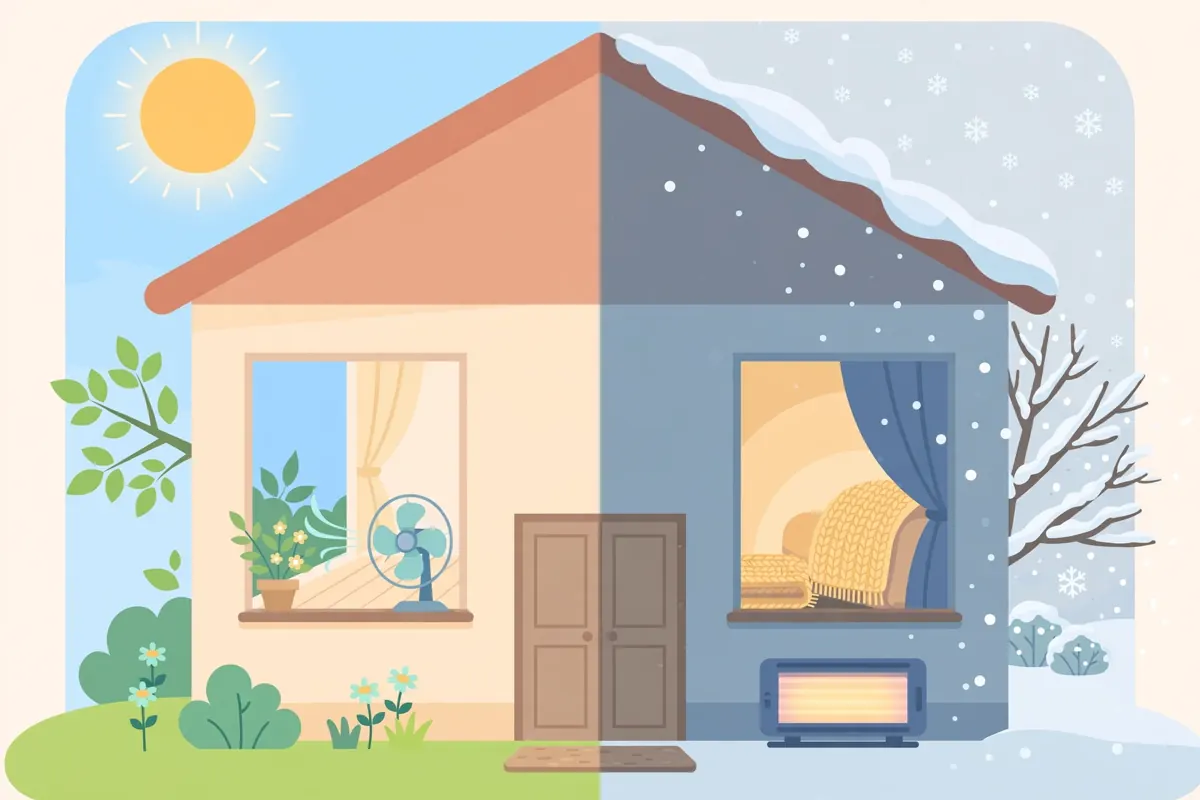
So compare a bill with the same season before it, rather than only with last month. Note the month, the season, and anything unusual, like guests or a cold snap.
What a typical household picture usually includes
When people look up typical household bills, they usually want a simple breakdown: what kinds of bills does an ordinary home have? Think of it as a typical budget breakdown, but in kinds of bills, not in amounts. Most homes have housing, energy, and water. Then comes food, household supplies like cleaning items, transport, and phone and internet services. On top of that sit small miscellaneous costs — the little things that are easy to miss one by one, but that still add up over a month.
The shape of that picture changes with household size. A single person living alone usually uses less in the everyday areas: fewer showers, less laundry, and less cooking. A couple often shares many of those same costs, so the picture grows, but not always by the same amount again. A larger family tends to use more across the board — more food, more laundry, more hot water, and more devices — so its monthly picture looks fuller, even when everyone is being careful. None of these pictures is the “right” one. They are just different homes, living different everyday lives.
One more idea helps here: money left over after bills. That simply means what remains once your fixed, variable, and yearly bills for the month are covered. In a high-use season it may be smaller, and in a mild month it may be larger, and that swing is normal. It is not a test score, and there is no single amount that fits every home. Over a full year, the ups and downs tend to balance out a little, which is why a yearly view can feel calmer than judging one hard month alone.
How to check your own bills
You do not need fancy tools. A notebook, a phone note, or a sheet of paper will do.

First, gather recent bills for housing, energy, water, food, transport, and phone and internet services. Next, list each bill by name, in plain words — “Electricity,” “Water,” “Internet.” Then mark each one as fixed, variable, or yearly, so you can see which bills you can predict and which will naturally move up and down.
Now look for patterns, not problems. Do energy bills rise in cold months? Does food spending rise when guests visit? Patterns are normal, and they help you plan. If a bill jumps for no clear reason, check the basics: was the reading estimated, did a plan change, or was there an unexpected fee? Finally, build your own monthly picture from your fixed bills, your usual variable bills, and your yearly bills and their due dates. That becomes your own personal average.
A fair look: is comparing to an average helpful?
What works well: It gives you a starting point when you are new to running a home, and helps you learn the names and types of bills you may face.
Where to be careful: An average hides real differences in home size, household size, region, and season, so a gap between your bill and the average may mean nothing at all. Chasing one too hard can lead to worry, or to cutting back on things your home genuinely needs, like heating in cold weather.
Who it suits: Someone learning about bills for the first time, or moving into a first home. Used lightly, it is a fine place to start.
Who it may not suit: Someone who already has a clear monthly picture of their own bills. If comparing makes you anxious rather than informed, step back and return to your own bills.
The honest verdict: averages are for learning, not for judging. Learn from them, then trust your own monthly picture.
A note on how this advice was put together
This guide is based on general, everyday knowledge about how household bills work: how fixed, variable, and yearly bills behave, why use changes with home size, household size, region, and season, and how a simple monthly review helps a household understand its own spending. It is not a quote of any one provider’s prices, and it does not claim that any home should pay a particular amount. Prices and plans differ by provider and place, and they change over time, so before you decide about a plan or a switch, check your own bill, your plan terms, and your provider’s current information. If a bill looks wrong, or money is tight, speaking with your provider or a trusted local advice service is a wise next step.
Frequently asked questions
What are average monthly household bills?
A rough middle point drawn from many homes. They do not describe any single home exactly.
Why are my bills higher than the average I read about?
Often for a simple, normal reason: a larger home, more people, different local prices or weather, or a high-use season.
Why are my bills lower than the average?
That can be normal too. A smaller home, fewer people, mild weather, careful habits, or a plan that fits you well can all keep bills lower.
What is the difference between fixed and variable bills?
Fixed bills stay about the same each month. Variable bills rise and fall with use and season.
How do yearly bills fit into a monthly picture?
They still count, even though they do not arrive every month. Keep a note of each one and when it is due, so it never arrives as a sudden shock.
How often should I check my bills?
A short check each month is plenty: gather, sort, and look for patterns.
Do single-person homes and larger families have the same typical bills?
No. They usually have the same kinds of bills, but a larger household tends to use more food, water, energy, and laundry, so its monthly picture is usually fuller.
What does money left over after bills mean?
It means what remains after your bills for the month are covered. It changes with the season and with yearly bills, so a smaller amount in one month does not by itself mean something is wrong.
A calmer way to think about your bills
Averages are not a test, and your home is not failing if it does not match one. Start with your own bills, sorted into fixed, variable, and yearly groups, and over time you will build a monthly picture that fits your home — and that picture, not a distant average, is the one worth trusting.