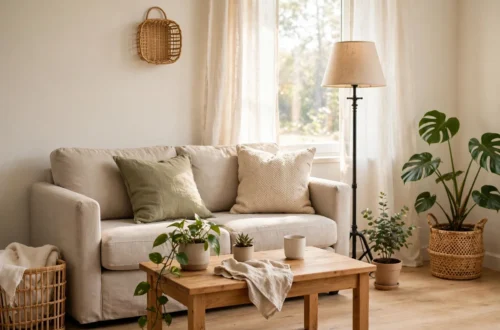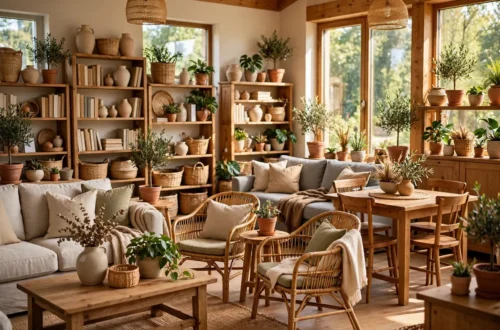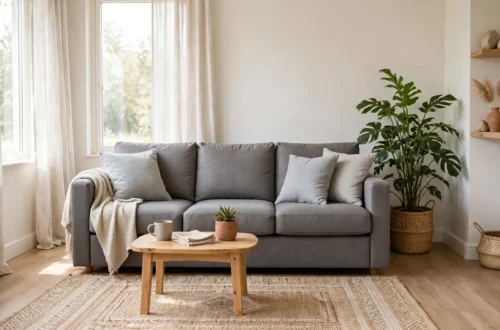








You do not need a big budget to make your living room warm and comfortable. Just do not grab the cheapest thing you see and hope for the best. It is to plan first, spend most care on pieces you use every day, and save on the rest. This guide covers living room furniture on a budget as a whole room, not just one sofa.
1. Start With the Room, Not the Store
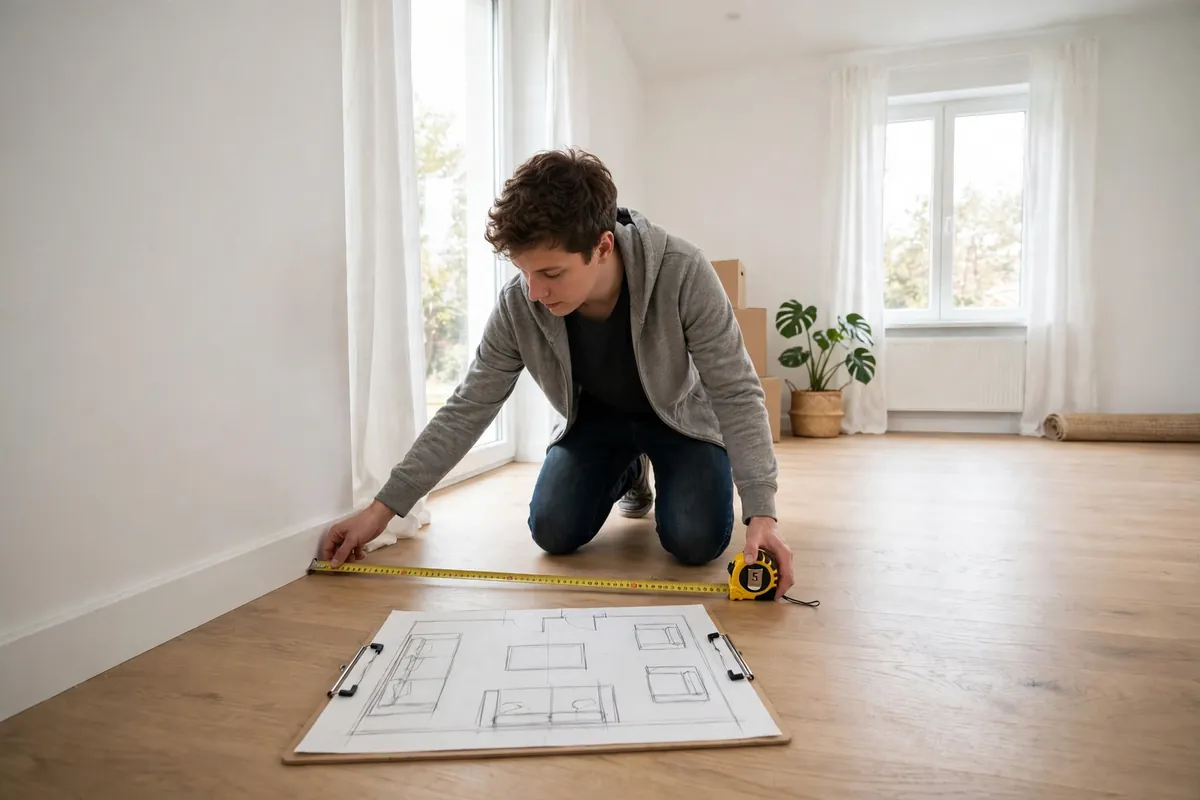
Many people fall in love with a big sofa in a store, then find it does not fit or blocks a door at home. Start at home instead. Measure each wall, plus the doors, windows, heaters, and plugs. Also measure the door you will bring furniture through, and keep these numbers on your phone when you shop.
Think about how you use the room. Do you watch TV, read, or host friends there? Do you have kids or pets? A family that watches TV each night needs a good sofa and a clear view of the screen.
Draw a simple layout on paper. Mark the doors and windows, then draw boxes for the sofa, chairs, and table. Leave space to walk around each piece. Then list priorities in order: sofa, seating, table, storage, then decor.
2. Sofa First: How to Get a Decent Couch on a Budget
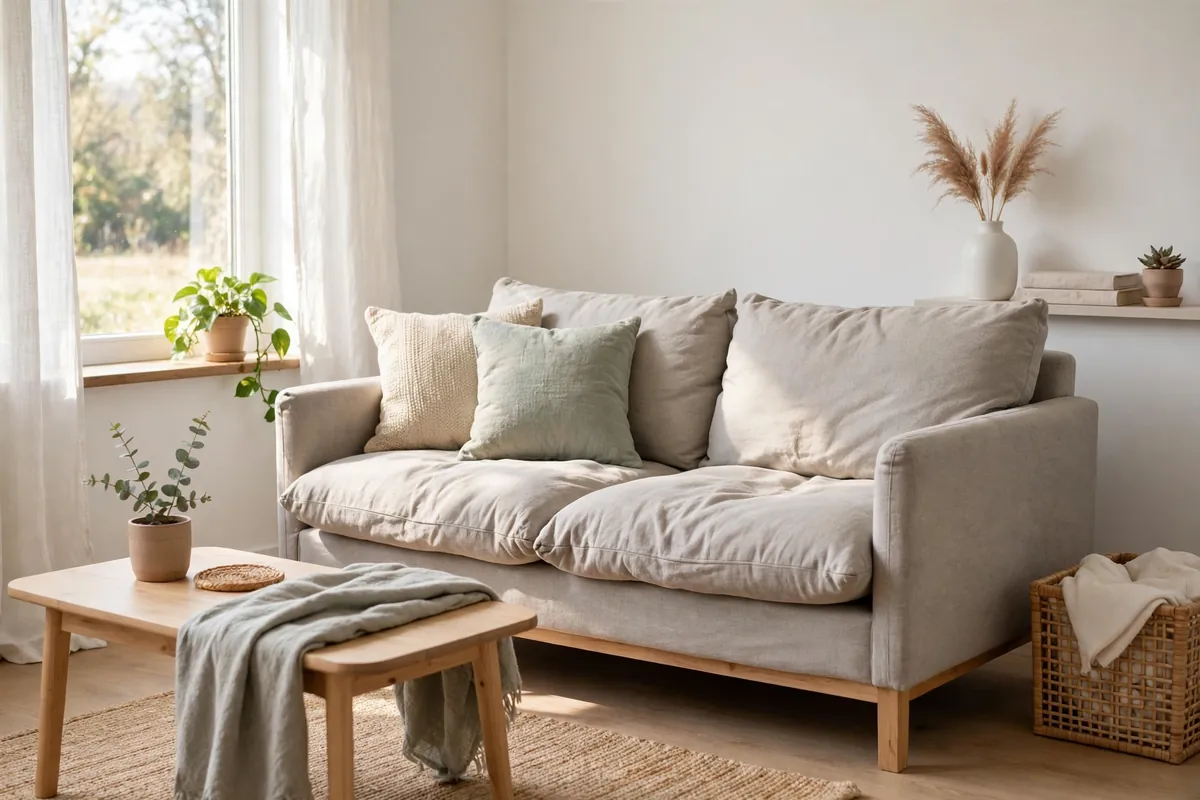
The sofa is where you will sit most, so the best affordable living room furniture starts with a sofa that fits your room, your life, and your body. A three-seat sofa suits a medium or large room. A two-seat sofa, often called a loveseat, suits a small room, where a loveseat plus a chair can feel much better than one huge sofa. Leave a little space on each side, so the room does not look crowded.
Pick a simple, plain style. You can change it later with cushions and a throw.
When you look at cheap couches for living room use, test them if you can. Sit as you sit at home. Do your feet reach the floor? Does your back feel supported? Do the cushions feel firm, not saggy? Press them: they should spring back, not stay flat. A good frame should feel solid, not wobbly. Prices change often, so check prices at the time you read this.
3. Chairs, Tables, and Storage Worth Spending On — and What to Skip
Once you have a sofa, add seating. Cheap living room chairs can be a great buy, but only if they are comfortable and sturdy. If no one wants to sit in a cheap chair, it was not a bargain at all — it is just clutter taking up space. You need good back support, or you will avoid that chair every day. Sit in a chair before you buy it, and check that it does not rock or squeak. The same care applies to inexpensive living room chairs bought online: read reviews about comfort and sturdiness first.
For tables, keep it simple. A small coffee table and one side table are often enough, and the coffee table should be lower than the sofa seat. Avoid a huge table in a small room, because it eats up walking space. For storage, start with one good piece, such as a closed cabinet or a storage bench. Closed storage hides clutter and makes a room look calm.
Skip, for now, extra side tables, large display units, and matching sets you do not need. Mixing simple pieces in matching colours works just as well. Buy in stages: sofa, then chair, then table, then storage.
Where to Spend More Care, and Where to Save
Use this short guide when you are deciding what to buy first. “Spend more care” does not mean spend the most money. It means take more time to check fit, comfort, and sturdiness.
| Piece | Spend more care on / buy first | Save on / keep simple or buy later |
|---|---|---|
| Sofa | Fit for your room, comfort when you sit as you do at home, a solid frame, and cushions that spring back | Fancy shapes, bold patterns, or extra features you do not need |
| Chair | Back support, comfort, and sturdiness — a chair no one wants to sit in is not a bargain | A second or third chair, until you know you have room and guests often |
| Tables | The right size — a coffee table lower than the sofa seat, with room left to walk around it | Extra side tables, or a large table in a small room |
| Storage | One good closed piece, such as a cabinet or storage bench, that hides clutter | Large display units, or several storage pieces bought at once |
| Decor | A rug large enough for the front legs of the sofa and chairs, plus a small set of matching colours | Lots of small, unrelated items bought one by one |
Buy in the order above, and pause before each next step. That pause is what stops a room filling up with pieces you do not really use.
4. Cheap Living Room Decor That Does Not Look Cheap
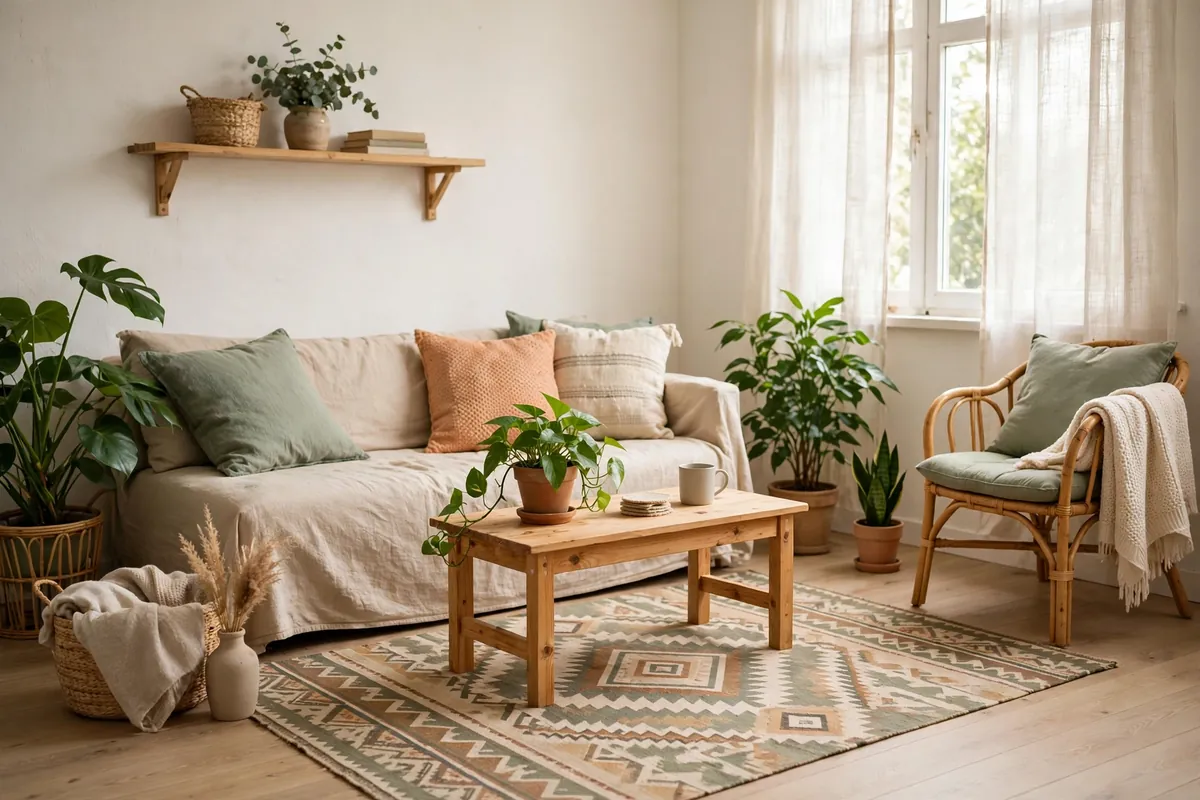
With cheap decor, less is more. Pick a few simple things you like, and repeat those same colours and shapes, instead of filling the room with lots of little bits that do not go together. Start with a rug. Pick one large enough for the front legs of your sofa and chairs to sit on it. Choose a plain or simple pattern in a colour that matches your sofa and cushions.
Next, add cushions and a throw. These are inexpensive living room furniture ideas that change a room fast. Pick two or three cushion colours that go well together, and stick to them. A soft throw adds warmth. Plants are another low-cost win. One or two green plants make a room feel alive. Pick hardy types that need little care.
For walls, one or two large pieces of art look better than many tiny frames. Hang them at eye level. A mirror can also help, because it reflects light and can make a small room feel bigger. Use soft lamp light in the evening, not just one harsh ceiling light. Warm light, tidy surfaces, and a few well-chosen items will make even cheap living furniture look cared for and stylish.
5. Where Budget Furniture Goes Wrong, and How to Check Quality
Budget furniture is not the problem on its own. Honestly? Most trouble comes from skipping a few quick checks — and those checks only take a minute.
Check the frame first. Sit on it and shift your weight. It should feel solid, not creak, wobble, or feel loose. Avoid pieces that feel hollow or flimsy. Check the cushions next. Press them down and let go. Good cushions bounce back. Thin cushions that stay flat will soon look saggy. Covers that come off are a plus, since you can wash or replace them.
Check the joints, legs, and fabric. Legs should be firm and even, so the piece does not rock. Fabric should feel smooth and strong, not rough or thin.
Finally, check size and delivery before you order. Measure your door, hall, and lift, if you have one. The best inexpensive living room furniture is not always the cheapest item. It is the piece that stays comfortable and looks good after months of daily use.
For a fuller guide to choosing well, see What is a Buyers Guide? Definition & Examples.
A Note on How to Use This Advice
This guide is based on simple, practical checks anyone can do at home or in a store: measure the room and the door first, sit on a sofa or chair as you would at home, check that the frame feels solid and the cushions spring back, and read reviews about comfort and sturdiness before you buy online. Before you decide, check three things for yourself: the measurements for your own room, whether the piece feels comfortable for the way you sit, and the size and delivery details before you order. This slow, check-first method is better than buying the cheapest item you see, because a piece that fits, feels comfortable, and stays firm is far more useful over time than a bargain that sags, rocks, or blocks a door. No price, brand, or rating is promised here — prices change often, so always check them at the time you buy.
6. A Simple Budget Plan for the Whole Room
Follow this plan in order.
Step 1: Plan. Measure the room, draw a layout, and list your priorities.
Step 2: Sofa. Choose a simple, well-fitting sofa in a neutral colour. Test it for comfort, and check the frame and cushions.
Step 3: Extra seating. Add one good chair, or two if you have room and guests often.
Step 4: Tables. Add a coffee table and a side table, simple and the right size.
Step 5: Storage. Add one storage piece that hides clutter, such as a cabinet or storage bench.
Step 6: Decor. Add a rug, cushions, a throw, plants, and wall art. Use a small set of colours, and add warm lamps.
Step 7: Review. Live in the room for a few weeks. Notice what you miss, then buy only what is still missing. This pause stops impulse buys.
This plan works whether your living room is small or large. After all, a good budget living room is not about filling every corner. It is about choosing each piece with care, one at a time.
A room plan like this also helps with the List of Household Bills and Monthly Expenses.
Honest Check: Is Buying in Stages Right for You?
This is not a review of one sofa or one brand. It is an honest check of the buy-in-stages method this guide suggests: sofa first, then chair, then table, then storage, then decor.
How to judge it for yourself: does each piece fit through your door and in your room, does it feel comfortable and solid when you sit on it, and do the cushions spring back when you press them? If a piece fails one of those simple checks, it is not a good buy for you, even if it looks nice.
What is good about this method:
- You spend the most care on the pieces you use every day, starting with the sofa.
- You can live with each piece for a while before you buy the next one, so you learn what is really missing.
- Keeping colours simple and mixing plain pieces can look just as good as a matching set, often with more choice.
What to watch out for:
- The room will look unfinished for a while, and that can feel frustrating if you want it done at once.
- Colours and styles can be harder to match later, so keep your small set of colours in mind from the start.
- Prices can change while you wait between stages, so check prices again at the time you buy.
Who it suits:
It suits you if you want to furnish a room slowly, one good piece at a time, and you can wait before buying decor and extras.
Who it may not suit:
It may not suit you if you need a fully finished room straight away, for example for a move-in date that cannot move. In that case, still use the same checks — fit, comfort, frame, and cushions — but plan the whole room in one go, in the same order, instead of in stages.
Frequently Asked Questions
What should I buy first?
Buy the sofa first. It sets the size and style of the room. Then add a chair, a table, and storage, in that order.
How can I make cheap furniture look good?
Keep colours simple, add a good rug, cushions, and plants, and keep surfaces tidy. A few well-chosen items look best.
Are cheap couches worth it?
Some are, and some are not. Test for comfort, check the frame and cushions, and read reviews. A cheap couch that stays firm is worth it. One that sags fast is not worth it.
How do I furnish a small living room?
Pick smaller pieces, such as a loveseat and a light chair, and leave walking space. Use a large rug, light colours, and a mirror to make the room feel bigger.
Should I buy a matching furniture set?
Not always. A set can cost more and limit your choice. Mixing simple pieces in matching colours often looks just as good.