







We all make grocery shopping mistakes. You go in for a few simple things and come out with a full cart, extras you did not plan to buy, and one or two things you already had at home. It happens to almost everyone. It does not mean you are bad with money. It usually means one small habit tripped you up.
This post looks at the most common grocery shopping mistakes, why they happen, and a simple fix for each one. Try one fix at a time.
Mistake 1: Shopping When You Are Hungry
When you are hungry, everything looks good. Snacks seem more tempting, and a treat you would normally pass by suddenly feels like a good idea. You are more likely to grab extras.
Eat a small meal or snack before you shop. If you cannot eat first, keep the trip short and stick close to your list. And if you do shop hungry, pause before each extra item and ask: would I still want this after a meal? If not, put it back.
Mistake 2: Shopping Without a List
Shopping without a list feels free at first, but it is easy to forget the one thing you came for and easy to buy things you do not need. A list does not have to be fancy. A note on your phone or a scrap of paper will do. Its job is to guide you while shelves full of choices compete for your attention.
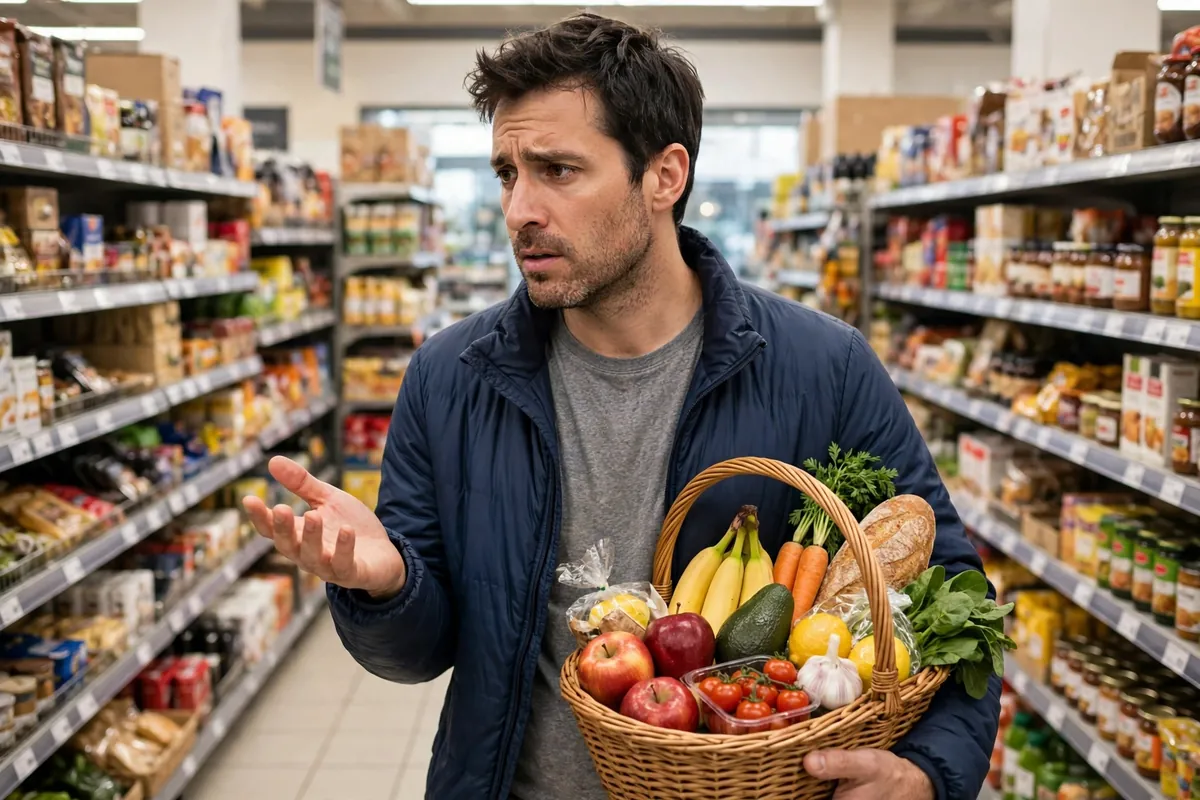
Before you leave, note what you need for your next few meals, then follow the list first in the store. An extra then becomes a choice, not an accident.
Mistake 3: Falling for Impulse Buys
Impulse buys are items you did not plan to get but grab anyway. They are often placed near the checkout or at the end of an aisle. An occasional treat is fine. The mistake is when impulse buys become a habit, trip after trip, until extras crowd out planned items.
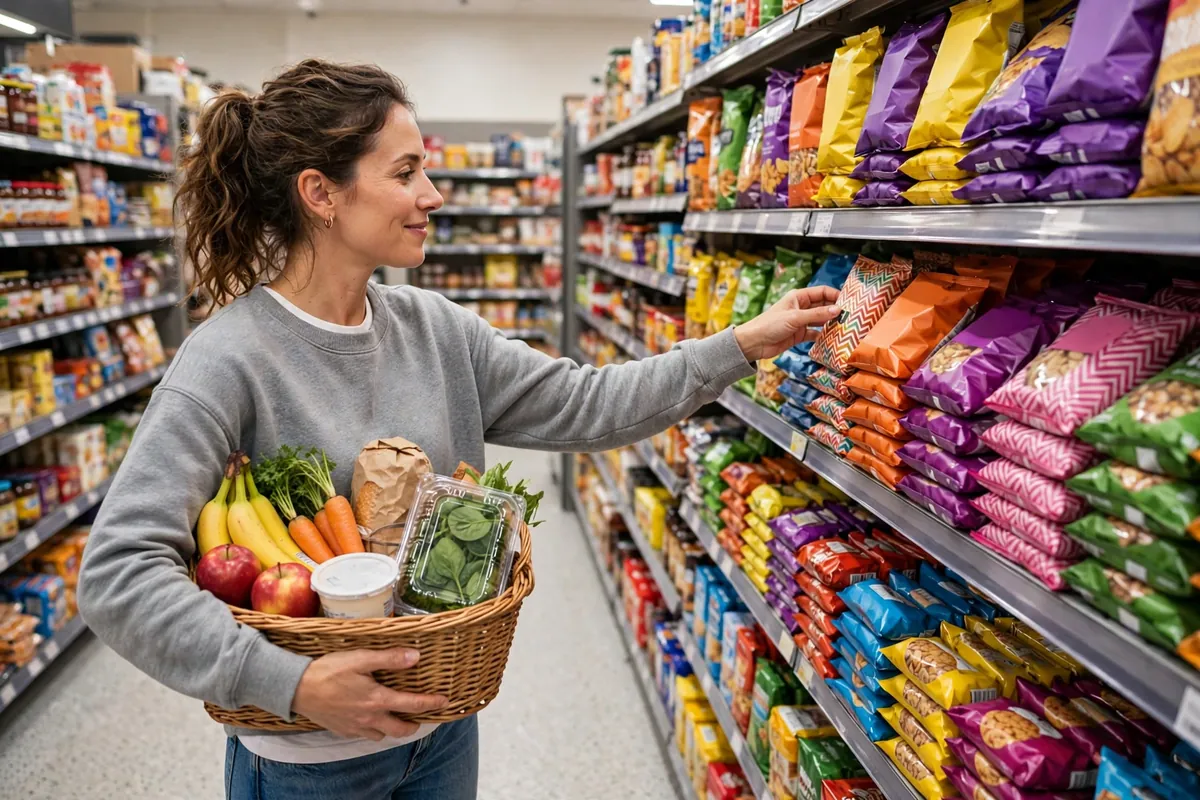
Try a pause rule. When an unplanned item pulls you in, wait a moment. Ask if it fits a meal you are planning, or if you already have something similar at home. If it is a treat you truly enjoy, enjoy it. Otherwise, leave it on the shelf.
Mistake 4: Falling for the Bulk Trap
A bigger pack often looks like better value, and it can be, if you will truly use it all. The bulk trap happens when a large pack feels like a deal, but then half of it sits at the back of a cupboard, goes stale, or gets forgotten. Fresh food goes off even faster.
Before you buy in bulk, ask: will my household finish this in time, and do I have room to store it? Bulk buying works best for long-lasting foods you use often, like rice or pasta.
Mistake 5: Ignoring Unit Prices
Two packs can look similar, but one may give you more food for the same shelf price. A unit price shows the cost for a set amount, such as per weight, so you can compare packs of different sizes fairly. Many shoppers skip it in a hurry.
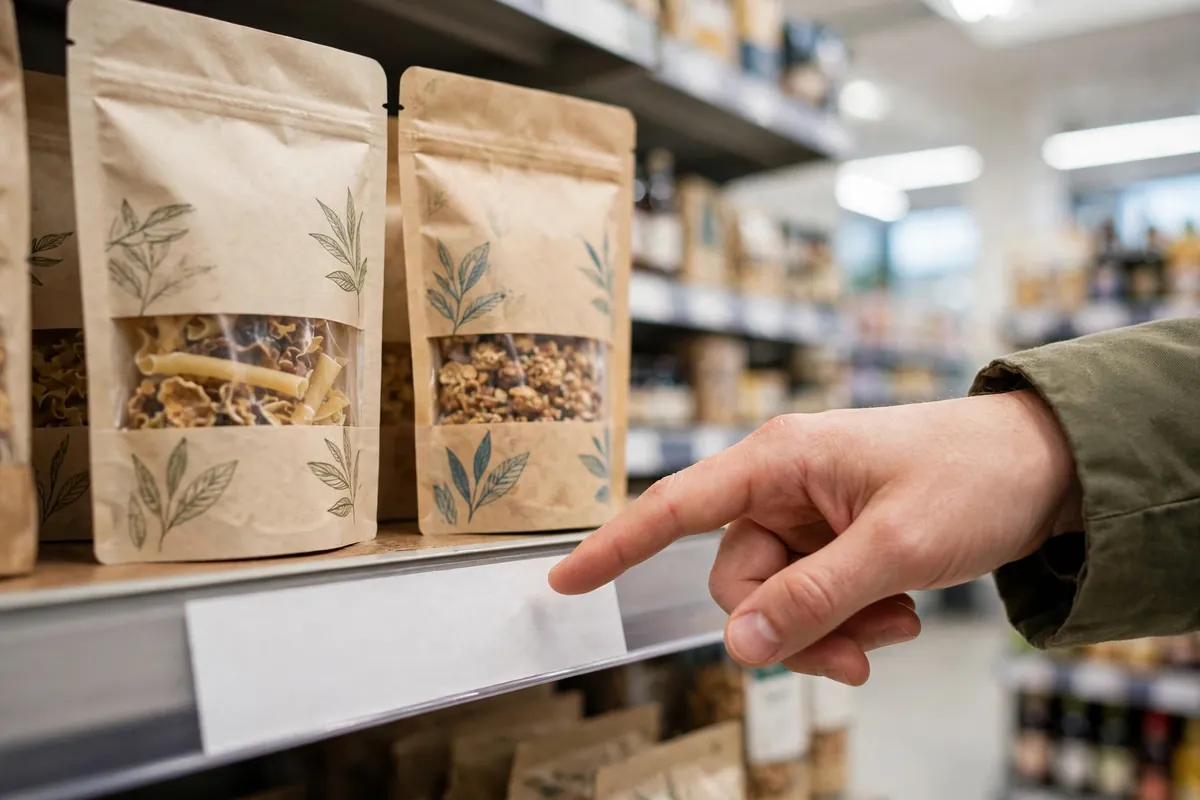
When you compare two similar items, look at the unit price on the shelf label, not just the main price. If a larger pack will not all get used, the smaller pack may still be the smarter pick.
Mistake 6: Skipping the Pantry Check
How many times have you bought something, got home, and found you already had two of them? Before you leave, open your cupboards and fridge for a quick look. Note what you already have, what is running low, and what you do not need this week. This stops repeat buys.
It also helps you plan meals around what you already own. If you share your home, a quick check-in stops two people buying the same thing.
Mistake 7: Buying Too Much Fresh Food at Once
Fresh food does not wait. Fruit ripens, bread goes stale, and milk has a short life once opened. Buying a lot of fresh food in one trip, with no plan for when you will use it, often ends with food going to waste.
Match fresh food to your real week. Buy fresh food for the meals you know you will make, and leave the rest for a later, smaller shop.
Mistake 8: Skipping the After-Shop Check
When the shopping is done, it is easy to drop the bags and walk away. But a quick after-shop check saves trouble later. Put fresh food away first, so it does not sit out too long. Then take a quick look: did you get everything on your list, and is anything missing? If something is wrong, it is easier to notice it now than days later.
Store food where you can see it, with older items in front. That way, your next pantry check is quick, and fresh food gets used before it goes off. One more note: if you feel unwell, it is better to wait for another day or ask someone for help if you can. If you must go, keep the trip short and stick to your list.
At a Glance: Mistakes and Simple Fixes
| Mistake | What often happens | Simple fix to try |
|---|---|---|
| Shopping while hungry | Extra snacks in the cart | Eat first, or keep the trip short |
| Shopping without a list | Forgotten items, extra buys | Write a short list first |
| Impulse buys | Unplanned items fill the cart | Pause and ask if it fits a meal |
| Buying in bulk, no plan | Large packs go stale | Buy big only if you will use it in time |
| Ignoring unit prices | A cheaper-looking pack gives less | Compare the unit price on the label |
| Skipping the pantry check | You buy what you already own | Check cupboards and fridge first |
| Too much fresh food | Fresh items go off unused | Buy fresh food for meals you will cook |
| Skipping the after-shop check | Fresh food sits out, missing items noticed late | Put fresh food away first, quick list check |
A Fair Look: Does Fixing Mistakes First Really Help?
This approach is easy to start, because you do not need a new system. You watch for a few habits you already know and change one at a time. It feels kind, not strict: you are not cutting out treats, just catching the moments where a shop drifts off course.
There are limits too. If time is very tight, or a store is out of stock, some mistakes will still happen. A list helps, but it cannot fix a rushed trip.
Who this suits: most everyday shoppers, especially anyone whose cart often grows beyond their plan, or who keeps finding duplicates at home. Who it may not suit: shoppers who already list, check the pantry, and rarely buy on impulse. For them, meal planning may be a better next step. On balance, this is a good starting point. It will not make every trip perfect, but it can make most trips calmer.
Why You Can Trust This Advice
This guide is based on common, everyday shopping habits many shoppers recognise: shopping hungry, forgetting a list, grabbing eye-catching extras, and buying more fresh food than a week allows. It does not rely on special tools, store claims, or test results, and it makes no promise about a particular outcome. Every household is different, so try one fix at a time and keep the changes that work for you. If a tip does not fit your life, leave it out.
Frequently Asked Questions
What is the biggest grocery shopping mistake?
Shopping without a plan is often the biggest one, because it leads to other mistakes: forgotten items, duplicates, and impulse extras.
Is it really a mistake to shop when hungry?
It can be. Hunger makes food look more tempting, so you may add snacks you would otherwise skip. Eating first, or keeping a hungry shop short, usually helps.
Are impulse buys always bad?
No. An occasional treat you truly enjoy is fine. Impulse buys become a problem only when they happen every trip and crowd out the foods you actually planned to buy.
Is buying in bulk always a mistake?
No. It works well for long-lasting foods you use often, with room to store them. It becomes a mistake when the pack is too big to finish in time.
How can I stop buying things I already have at home?
Do a quick pantry and fridge check before you shop, and build your list around what is missing. A quick check-in with housemates can stop duplicate buys too.
What should I do after grocery shopping?
Put fresh food away first, check your list for anything missing, and store food where you can see it. A quick finish now makes your next shop and your next pantry check much easier.
A Calmer Shop Starts With One Small Change
You do not need to fix every mistake at once. Pick one: eating before you shop, writing a short list, or checking your pantry. Try it on your next trip. Small habits build up, and a calmer shop is easier to enjoy and easier to cook from.