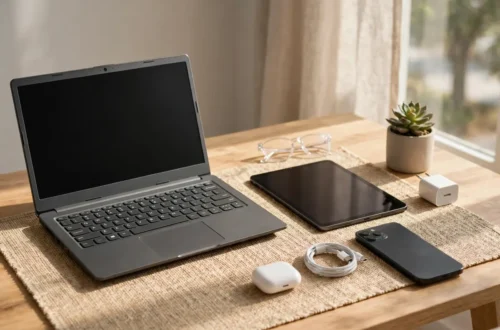









The best cheap tech gadgets are not the cheapest ones you can find. They are the small tools you actually use again and again.
A good cheap gadget solves a real problem. It helps you work, rest, travel, or stay organized. If you use it every week, it is worth it. If it sits in a drawer, it was not a bargain, no matter how low the price was.
This guide does not list specific products or prices, because prices change fast. Instead, it shows how to judge any gadget you find.
1. What Counts as a “Cheap but Useful” Gadget — and What to Avoid
A cheap but useful gadget does one job well. It is easy to use, feels solid enough to last, and fits your daily life.
Useful signs: you can name the exact problem it solves; you will use it at least once a week; it works with the phone, laptop, or charger you already own; and it is simple to set up.
Avoid signs: it does many things, but none well; you only want it because it looks fun for a day; it needs special parts or chargers that are hard to find; or it feels weak or badly made.
Many of the cheapest gadgets fall into the second group. If one breaks fast, or you never use it, it was not a bargain. Buy for a job, not for a thrill: ask what it will do for you on a normal Tuesday.
2. How to Pick: Use, Durability, and Total Cost, Not Just the Sticker Price
The sticker price is only part of the cost. Look at use, durability, and total cost.
Use. How often will you use it? A gadget you use every day can be worth more than one you use once a month. Where will you use it? A desk gadget can be bigger. A travel gadget must be small and light.
Durability. Cheap does not have to mean weak. Look for strong joints, firm buttons, and cables that bend without cracking. If many reviews say it broke fast, believe them.
Total cost. Does it need batteries, a special charger, or new parts often? Those extras add up. Also check size and weight: very small gadgets are easy to lose, and big ones are a pain to carry. Ask not only, “Is this cheap?” but “Will it last, and what will it cost in total?”
For a step-by-step way to weigh two options, see How to Compare Products on Amazon.
3. Gadget Ideas by Use: Desk, Home, Travel, and Everyday Carry
Start with the place where you need help — your desk, your home, or your bag. Then look for a gadget made for that place.
Desk
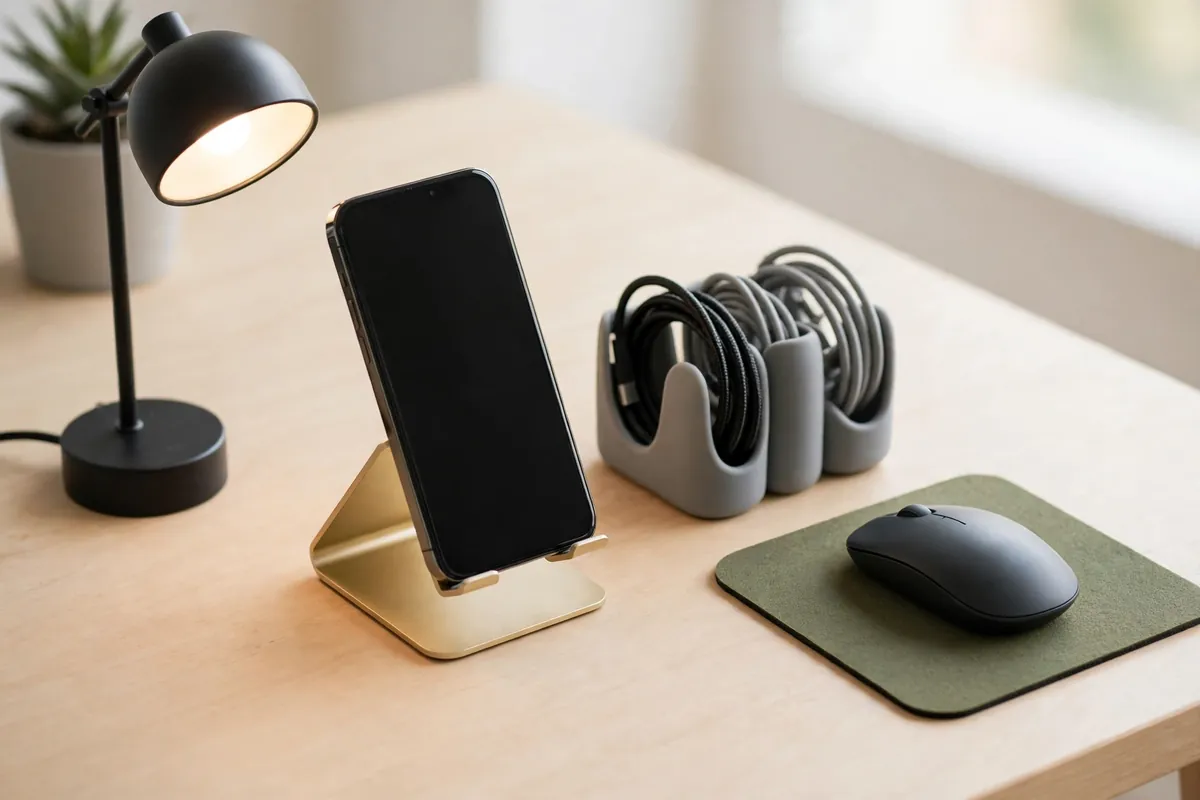
Cheap desk gadgets can make work and study easier. A phone stand holds your phone at a good angle for calls or reading. A small desk lamp gives clear light without taking much space. A cable organizer keeps cords tidy. A simple mouse pad makes your mouse move more smoothly.
People like these because they are small, simple, and easy to use each day. In short, they help keep your desk tidy and calm.
Home
At home, useful cheap gadgets often help with sound, light, or comfort: a small speaker, a plug timer for a lamp, or a tablet stand for the kitchen. Keep them simple — if one needs a complex app, you may stop using it.
Travel
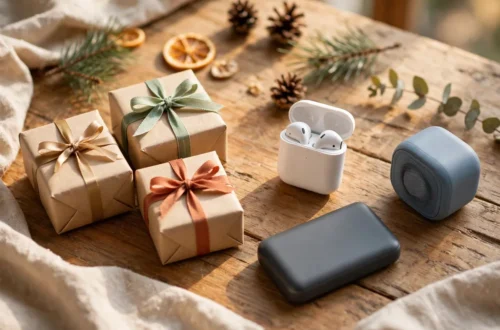
Travel gadgets must be small, light, and tough: a compact power bank, a short tangle-free cable, and small earbuds in a pocket case. A tiny travel adapter can help, but check it fits the plugs where you are going. Pack only what you will use.

Everyday carry
Everyday carry means small items you take each day, such as a small torch or a card holder. If it is too big for your pocket, you will leave it at home. One strong item beats a pocket full of extras.
Desk, home, travel, or pocket — the best one for you is the one that fits how you already live.
Gadget Use at a Glance
Use this quick summary to match a gadget type to where you will actually use it — and to the one check that matters most for that place.
| Where you will use it | Gadget types already covered in this post | Main thing to check before buying |
|---|---|---|
| Desk | Phone stand, small desk lamp, cable organizer, simple mouse pad | Size on your desk, and whether it fits the phone, laptop, or charger you already own |
| Home | Small speaker, plug timer for a lamp, tablet stand for the kitchen | Whether it is simple to set up and use, with no complex app you may stop using |
| Travel | Compact power bank, short tangle-free cable, small earbuds in a pocket case, tiny travel adapter | Size, weight, and toughness — and whether the adapter fits the plugs where you are going |
| Everyday carry | Small torch, card holder | Whether it fits your pocket — if it is too big, you will leave it at home |
In every row, the same rule from the post still applies: it should do one job well, and you should expect to use it at least once a week.
4. Cheap Gadgets Under $30 — What Is Actually Worth It
Many people look for gadgets under $30. That price range can be a good place to try something new. It is low enough to feel safe to try, yet often high enough for a gadget to be well made.
Usually worth it: simple, single-job gadgets — stands, lamps, organizers, cables, small speakers, and basic chargers. Often not worth it: gadgets that try to do too much, as a very cheap gadget with many features often cuts corners on each one. Also check claims that sound too good in reviews first.
Test it: does it do one job well, is it made for daily use, does it work with what you own, and do reviews say it lasts? If yes to all four, it is often a good buy; if no to two or more, skip it. Remember, “under $30” is a price band, not a promise about any one product — prices change, so check at the time you buy.
A Fair Look at Cheap Gadgets: What Is Good, and What to Watch Out For
This is not a review of one product. It is a fair summary of the trade-offs in this whole price band, judged by the same checks used in this guide: use, durability, total cost, reviews, returns, and compatibility.
What is good:
- Simple, single-job gadgets — stands, lamps, organizers, cables, small speakers, and basic chargers — can be useful every day without costing much.
- A low price makes it easier to try a simple fix for a real problem, such as a tidy desk or a phone that is easier to read.
- When a gadget works with what you already own and lasts with daily use, it can be good value even at a low price.
What to watch out for:
- Gadgets that try to do too much often do none of those jobs well, and a very cheap gadget with many features often cuts corners on each one.
- Hidden extras add up: batteries, a special charger, or new parts can raise the total cost above the sticker price.
- A gadget that does not fit — wrong plug, cable, or size — is useless, however cheap it was, and very small gadgets are easy to lose while big ones are a pain to carry.
- Repeated problems in reviews, such as a weak battery, are a warning even if the first few reviews look good.
Who this suits:
Anyone who needs one simple job done well — a tidier desk, clearer light, a phone at a good angle, or a small item for travel — and who will use it at least once a week.
Who this does not suit:
Anyone looking for a gadget to do many jobs at once, or buying mainly because it looks fun for a day. In that case, it is more likely to sit in a drawer, and it was not a bargain, no matter how low the price was.
5. What to Check Before Buying: Reviews, Returns, and Compatibility
Before you buy cheap gadgets, take five minutes to check three things.
Reviews. Read a mix, not just the top ones, and look for real use over weeks. Watch for the same problem again and again, such as a weak battery. One bad review may be bad luck; ten with the same problem is a warning.
Returns. Can you return it if it does not work, how long do you have, and do you pay for return shipping? A clear, fair policy is a good sign. Keep the box and receipt, and test it in the first few days.
Compatibility. This is the check people forget most. Check the plug, cable, size, and whether it works with your phone or laptop. A gadget that does not fit is useless, however cheap it was.
For a fuller guide to choosing well, see What is a Buyers Guide? Definition & Examples.
6. Quick Buyer’s Checklist
Use this checklist every time you buy cheap gadgets:
- What job will this gadget do for me?
- Will I use it at least once a week?
- Does it work with my phone, laptop, and charger?
- Is it strong enough to last, based on reviews?
- What is the total cost, including batteries or extras?
- Can I return it if it does not work?
- Have I checked the size, plug, and cable type?
- Am I buying it for use, not just because it looks fun?
If you can answer yes to most of these, go ahead. If you cannot answer the first three, wait.
There are good finds here, and there are traps too. Buy for a real need. Check the reviews and the return policy. Pick something built to last. Do that, and a cheap gadget can do a great job for your desk, your home, your travel, or your pocket.
How this guide was put together — and what to check before you decide: this guide does not name one product as the best, because prices change fast and the right gadget depends on your phone, laptop, desk, and travel. Instead, it gives you a simple method to judge any gadget yourself: name the exact job it will do, check that you will use it at least once a week, check that it works with what you already own, read a mix of reviews for use over weeks, and check the return policy and the plug, cable, and size. That method is better than sorting by price alone, because the cheapest gadget is only a bargain if you use it, if it lasts, and if its total cost stays low. Before you buy, run those same five checks on the exact gadget in front of you — this guide cannot check a product it does not name, and a seller’s listing cannot do that checking for you.
Frequently Asked Questions
What are the best cheap tech gadgets for beginners?
Start simple: a phone stand, a small lamp, a cable organizer, and a basic power bank. They are cheap, simple to use, and useful every day.
Are cheap gadgets worth buying?
Yes, if you pick well. Cheap but useful gadgets that do one job well can last a long time. Weak gadgets that try to do everything often are not worth it.
How much should I spend on a cheap gadget?
There is no one right amount. Many good, simple gadgets fall in the under-$30 band, but the right spend depends on use. A gadget you use daily may be worth more than one you use once a month.