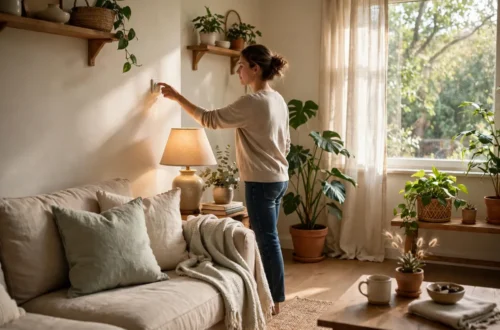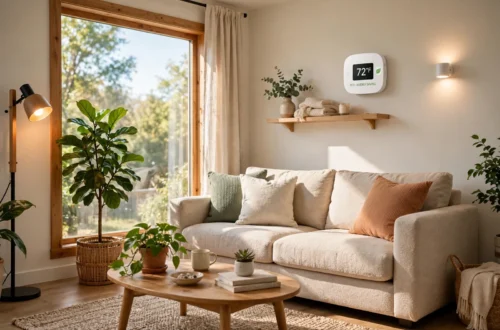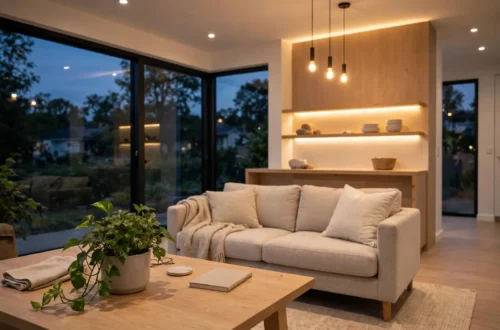









Energy saving means using less energy to do the same everyday things. You still light your home, cook your food, wash your clothes, and stay warm or cool. You just waste less along the way.
You do not have to live without comfort, and you do not have to buy a new home full of new machines. Small choices, made often, are what add up: a light switched off in an empty room, a heater turned down when everyone is out, a washing machine run only when it is full. Together, they change how much energy your home uses.
What energy saving and energy efficiency mean
People often use these two phrases as if they mean the same thing. They are close, but not quite the same.
Energy saving is about what you do. You choose to use less: switch something off, turn something down, or wait until you really need it. The machine stays the same. Your habit changes.
Energy efficiency is about how well a machine does its job. A more efficient machine does the same job while using less energy. The habit stays the same. The machine is better at its work.
Here is a simple pair of examples. Switching off a light when you leave a room is energy saving. Using a bulb that gives the same light while using less energy is energy efficiency.
Saving comes first because it costs nothing and you can start today, with what you already own. Efficiency helps later, when something needs replacing anyway. For a fuller explanation with easy examples, read What Is Energy Efficiency? Definition and Easy Examples.
Saving energy at home: everyday habits
Home is where most of us use energy without thinking. We leave the television on while we do something else. We heat the whole house even when we are only sitting in one room. None of this is careless on purpose. It is just habit, and habits can change.
Do not try to change everything at once. Pick one small habit and let it settle before you add another.
Start with the lights. When you leave a room, switch the light off. On a bright day, open the curtains and let daylight do the work of a lamp. At night, use only the light you need, where you need it.
Next, look at standby power. Some devices keep drawing a small amount of power even when they look switched off. A switchable power strip can make this easy: plug the television and its related devices into one strip, and switch it off at night or when you go out.
Then think about heating and cooling. The aim is to heat or cool the person, not the empty house. In cold weather, wear a warm layer before turning the heating up, and close curtains in the evening. In warm weather, open windows when the air is cooler. When you leave the house for hours, turn the heating or cooling down. In the kitchen, only boil the water you need, and wait until the washing machine is full before running it. For more detail, read How to Save Energy at Home.
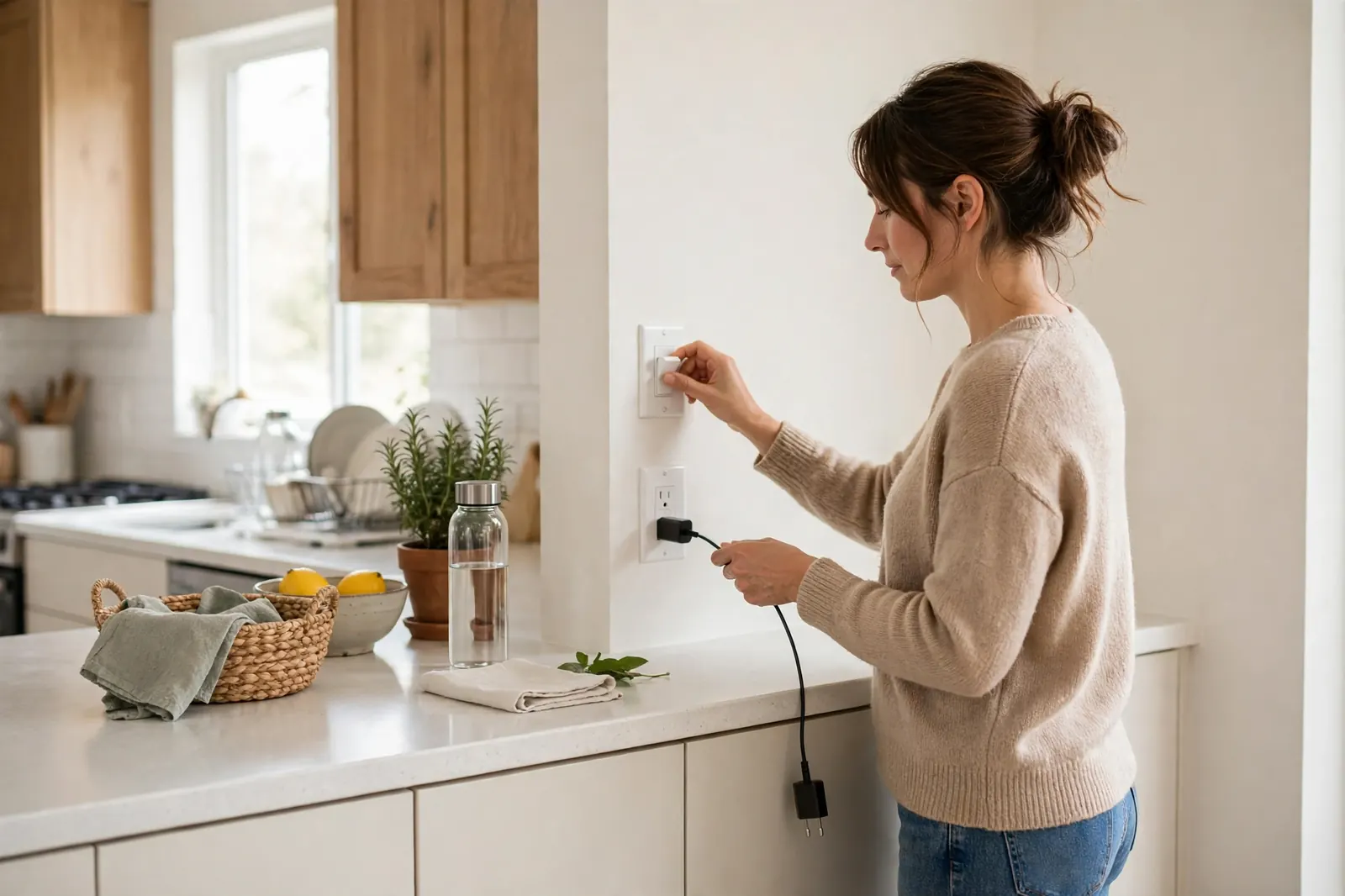
None of these habits asks you to sit in the dark or feel cold. Heating an empty room is waste. Lighting an empty room is waste. Running a half-empty machine is waste. Cutting waste does not take comfort away.
Conservation measures that last
Habits are powerful, but some measures keep working even when you forget. These are the lasting measures, the quiet fixes that stop the same waste from coming back day after day.
A draughty gap is a good example. Every time the heating runs, warm air slips out through that gap, and cold air slips in. Closing the gap does not need daily effort. Once it is closed, it keeps doing its job.
Curtains used with care work the same way: closed on a cold evening to keep warmth in, opened on a bright morning to let daylight in. A short bedtime walk-through can also become automatic: lights off, television strip off, heating turned down. Daily habits cut waste today. Quiet fixes stop that waste from returning tomorrow. For more, read Energy Conservation: Tips & Measures.
Power and electric savings around lights and appliances
Lights and appliances are where many people first notice their energy use, because they are the things we touch every day. You do not need to understand electricity in detail to use them with care.
For lights, use light where you are, not everywhere at once. A single lamp beside your chair is often enough for reading, while the whole room does not need to be bright. When daylight is available, let it lead.
For appliances, the golden rule is simple: run them when you need them, and run them full. A full washing machine does more useful work for each run than one that is half empty. A kettle that boils only the water you need wastes less heat than one filled to the top for a single cup.
Standby is easy to miss. An appliance that looks off may still be showing a small light. If you will not use it for a long while, switching it off at the strip stops that quiet draw. Leave anything that must stay on, such as a medical device or a fridge, exactly as it should be. When an old appliance finally needs replacing, that is the right time to think about efficiency, and to choose a machine that fits your daily life.
Comparison table: wasting energy vs. saving energy
| Everyday situation | The wasteful way | The saving way |
|---|---|---|
| Leaving a room | Lights stay on for hours | Switch off when you leave |
| Television at night | Left on standby all night | Switch off the power strip |
| Cold evening | Heating turned up high straight away | Warm layer, curtains closed |
| Hot afternoon | Cooling runs with sun pouring in | Curtains closed, windows opened when air cools |
| Leaving the house | Heating or cooling left running | Turn it down while you are out |
| Washing clothes | Small loads run again and again | Wait for a full load |
| Boiling water | A full kettle for one cup | Boil only what you need |
An honest review: is an energy-saving routine right for you?
What works well. An energy-saving routine costs nothing to start. You do not need to buy new equipment, and most changes take only seconds: a switch, a closed curtain, a full load. Because the changes are small, they are easy to keep going.
What to watch out for. Saving alone has limits. Habits will not fix a broken heater or a faulty appliance. If an appliance smells strange or trips a switch, that is a repair problem, not a habit problem. Every home is different, so no guide can promise what will happen in yours.
Who it suits. Anyone who wants to use less energy without spending money first: renters, families, students, and homeowners alike.
Who it may not suit. If you need steady heating or cooling for health reasons, comfort and safety come first, always. Do not turn the heating down in a way that makes the home unsafe for a baby, an older person, or someone who is ill. If a medical device must stay powered, leave it on.
A note on the basis of this advice (E-E-A-T)
This guide is written from widely shared, practical home-energy advice: use less by switching off, heating and cooling with care, running appliances only when needed, and fixing quiet waste where you can. It does not come from a laboratory test of one home, and it does not promise a particular result for your home, because homes differ in size, age, climate, and the people who live in them. Before you change anything important, check it for your own home, and if you are unsure about a heater setting or an electrical setup, ask a qualified tradesperson rather than guessing.
Frequently asked questions
What is energy saving in simple words?
Energy saving means using less energy to do the same everyday things, by wasting less. You still light, heat, cook, and wash, but you stop energy from being spent for no reason.
What is the difference between energy saving and energy efficiency?
Energy saving is about what you do, like switching off a light. Energy efficiency is about the machine, like a bulb that gives the same light while using less energy.
What is the easiest energy-saving habit to start with?
Switching off lights in empty rooms and switching off the television power strip at night. Both take seconds and cost nothing.
Can I save energy without feeling uncomfortable?
Yes, if you focus on waste rather than comfort. Heating or lighting an empty room is waste. Cutting it does not mean sitting cold or in the dark.
A gentle place to start
You do not need to change your whole home in one day. Start with what is in front of you: a light in an empty room, a charger that has finished its job, a curtain that could keep warmth in tonight. Energy saving is about noticing waste and choosing better, one small habit at a time.