







Saving energy at home does not mean sitting in the dark or feeling cold. It means using only the energy you really need, and wasting less of the rest.
A light switched off here, a shorter shower there, a heater set one notch lower — none of these feel big alone. Together, they cut your home’s energy use every day. Pick two or three ideas from this guide, try them for a week, and then add more.
Where Does Home Energy Go?
Heating and cooling usually take the biggest share, because they run for hours at a time. After that come water heating, appliances, lights, and devices left plugged in. Fix the big things first, and you will already be doing most of the work.
Heating and Cooling: The Biggest Win
Only heat or cool the rooms you are actually using. There is no need to keep a spare bedroom as warm as the living room all day. Close the door to a room you are not using, and let it stay cooler.
Dress for the season indoors too. In winter, a warm sweater and a blanket on the sofa can feel just as good as turning the heater up another notch. In summer, light clothes, a fan, and an open window in the cooler evening hours can do the same job as running cooling all day.
Keep warm or cool air where it belongs. Feel for drafts around doors and windows on a windy day. A draft stopper under a door, or curtains closed at night in winter, helps warm air stay inside, and curtains closed on sunny windows in summer keep rooms cooler. Keep vents clear of furniture so air can move freely.
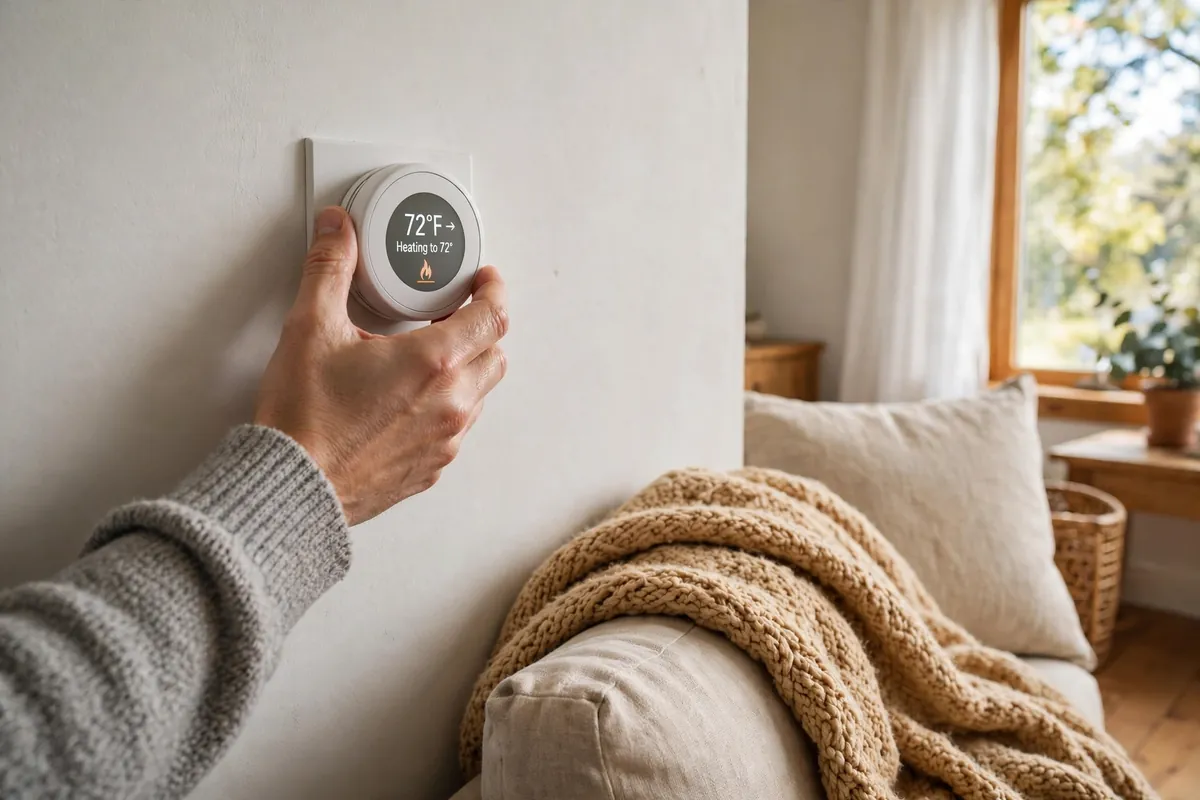
Take a second look at your thermostat. A notch lower in winter, or a notch higher in summer, feels strange for a day or two, then most people adjust. If you will be out for hours, there is no reason to keep the house at full comfort temperature while nobody is home.
Lights: An Easy Place to Start
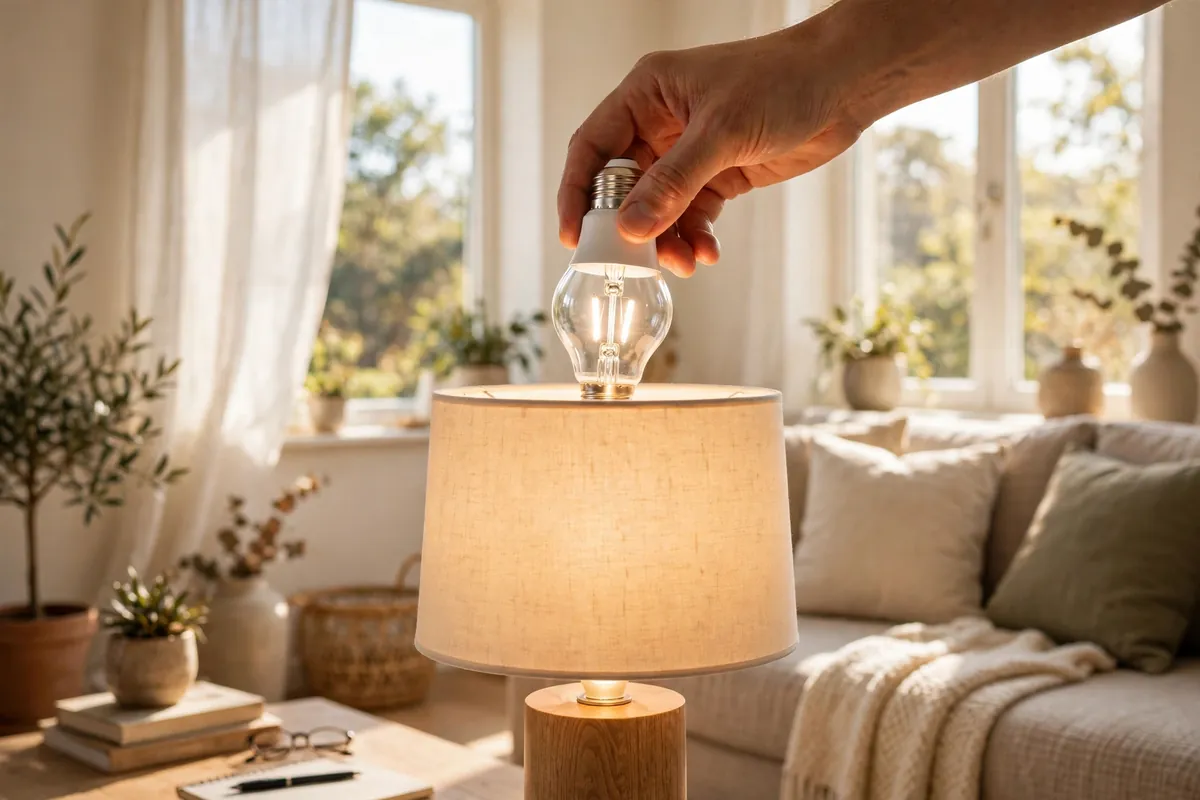
Start with the rooms you use most. Swapping old bulbs for LED bulbs is one of the simplest home energy saving steps there is. An LED bulb gives the same bright light, but uses less power to do it. You change it once, and then you just use the light as normal.
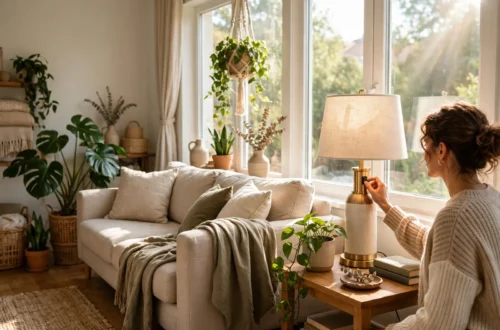
Use light only where you need it. A smaller lamp beside your chair is often enough for reading, and it uses less energy than lighting the whole room. Daylight is free too, so open curtains in the morning.
And then there is the oldest tip of all: turn the light off when you leave the room. It sounds too simple to matter, but lights left on in empty rooms add up over weeks and months.
Appliances: Use Them Smarter, Not Less Often
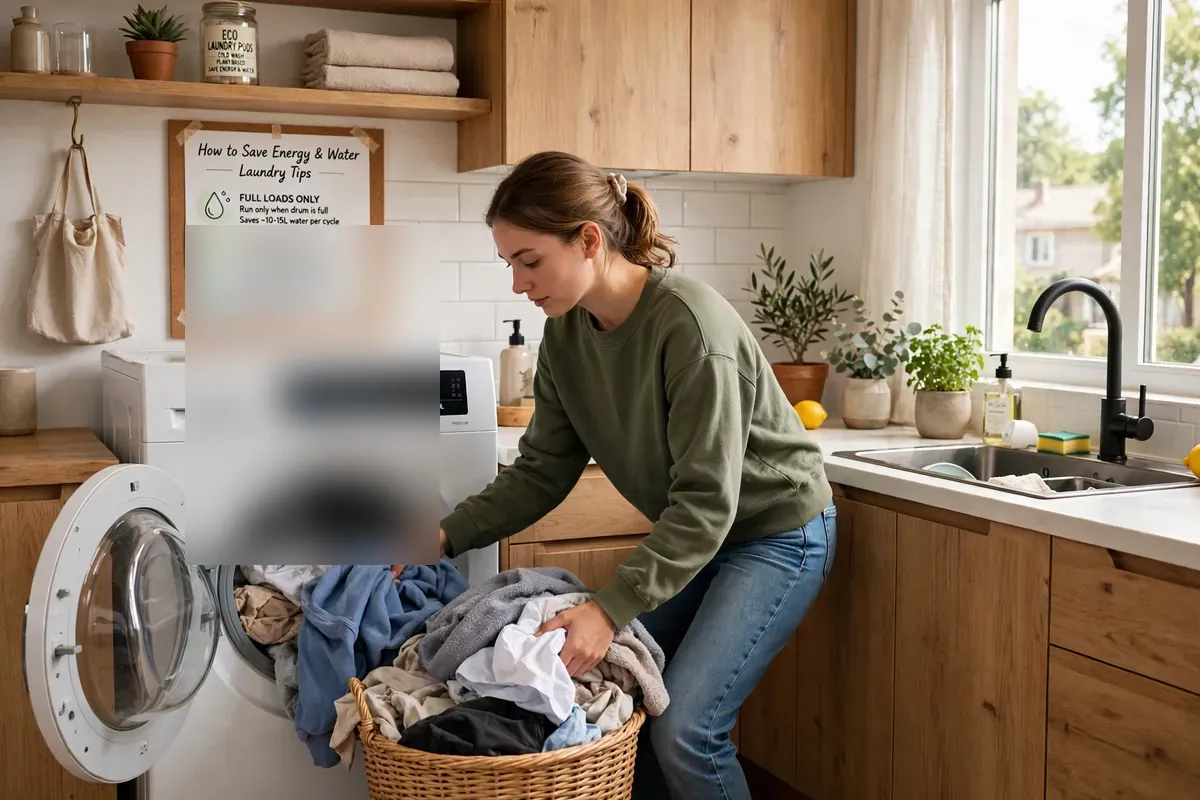
Wait until you have a full load before you run the washing machine. Two half loads use more energy and water than one full load. For everyday clothes that are not heavily stained, a cold or cool wash usually gets them clean, and skipping the hot wash saves the energy used to heat the water.
The fridge runs all day and night. Keep it full enough to hold the cold, but not so packed that air cannot move around the food. Let hot food cool down before you put it inside, and do not leave the door open while you decide what to eat.
For cooking, match the pot to the burner and put a lid on the pot — food cooks faster with less energy. When you buy a new appliance one day, check its energy label if your country uses one.
Hot Water: Small Changes, Real Savings
Heating water takes more energy than most people expect. Shorten your shower by a couple of minutes — you do not need to rush, just be a little quicker. Turn off the tap while you brush your teeth, a tiny habit you repeat twice a day. And run the dishwasher only when it is full, just like the washing machine.
If your water heater has a temperature setting, check what it is set to. Water hotter than you need is wasted energy, and it can even scald. Ask a qualified plumber about a safe setting, and never open a heater yourself if you are unsure.
Everyday Habits That Quietly Waste Energy
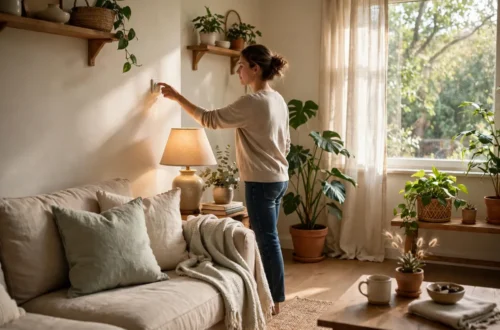
Some waste is almost invisible, because nothing looks switched on. Many devices keep using a small amount of power on standby — the TV, the game console, the printer, the phone charger left in the wall. One device uses very little, but a whole house full of them adds up, so switching devices fully off at the wall is an easy nightly habit. The same goes for things left running “just in case”: the fan in an empty room, the TV on while nobody watches. If nobody is using it, switch it off.
At a Glance: Old Habit vs. Smarter Habit
| Old habit | Smarter habit | What changes |
|---|---|---|
| Heating every room the same | Heat only rooms in use | Less energy spent on empty rooms |
| Lights on all over the house | Light only the spot you use | Same comfort, less power |
| Half-load washes | Full loads, cool wash when it suits | Fewer runs, less hot water |
| Long, hot showers | A couple of minutes shorter | Less heated water each day |
| Devices left on standby | Switched off at the wall | No quiet drain overnight |
A Fair Look: Is the “Little by Little” Way Right for You?
What this way means: Instead of buying lots of new equipment at once, you change small daily habits — lights, loads, showers, thermostat settings — and swap things like bulbs as the old ones wear out.
What works well: It costs little or nothing to start, so you can try it today. The steps are simple enough for the whole family, and changing one habit at a time means the new way tends to stick.
Where to be careful: Small steps take time to show a difference, so do not expect a changed bill overnight. Bills also move with prices, weather, and how many people are home, so a lower bill is not guaranteed from habits alone. Some homes also have bigger problems, like poor insulation, that habits alone cannot fix.
Who it suits: Most households, especially renters and families who do not want to spend much up front.
Who it may not suit: If your home is very drafty, or your heating system is failing, habits alone will frustrate you. Get advice from a qualified professional about the bigger fix first, and use these habits alongside it.
An Honest Note on This Advice
This guide is written from widely shared, practical home-energy advice: use less where you can, waste less heat and light, and run appliances on full loads with cooler water when it suits the job. It is general guidance for everyday homes, not a technical survey of your house, so your results will differ from anyone else’s. Before you change a heater setting, touch electrical or gas equipment, or spend money on insulation or a new appliance, check your manual or talk to a qualified local professional.
Your First Week
Start with bulbs and the “lights off when you leave” rule, then add one new habit every couple of days: drafts and thermostat, standby switch-off, full loads, shorter showers. Keep what felt easy.
Questions People Ask
What is the easiest way to save energy at home?
Start with lights and standby power. Swap the bulbs you use most, turn lights off in empty rooms, and switch devices fully off at night. These cost little and you can do them today.
Is it better to leave the heating on low all day or turn it down when out?
In most homes, heating an empty house all day wastes energy. Turning it down while you are out for hours, then warming the rooms you use when you return, usually uses less.
How can I save energy at home without spending money?
Use the habits in this guide: heat only rooms in use, use daylight, wash full loads in cool water when it suits, shorten showers, and switch devices off at the wall. None of these need a purchase.