







The Short Answer
What are some ways to save money that really work? Start with your biggest costs, add a few easy habits, and use a simple system to move money to savings first.
These ideas work because they are easy to stick with. You need a clear plan, a small start, and a monthly check. The advice here is general, so check your own bills and amounts, and pick what fits your home and budget.
1. The Strategies That Actually Move the Needle: Housing, Bills, Food, Transport
If you want to see a real difference, start with the things that take most of your money each month.
Housing. Housing is often the largest cost in a home. When you renew or review your rent or home loan, read the terms in full and ask what choices you have. If you share a home, agree on a fair way to split costs, and fix small problems early.
Bills. List every bill you pay: power, water, phone, internet, insurance, and subscriptions. For each bill, ask: Do I still use this? Is there a simpler plan that fits how I use it? Cancel what you no longer use, and compare plans for the rest. Plans and prices change, so check them at the time you read this. For power bills in particular, see What Is Energy Efficiency? Definition and Easy Examples.
Start with the List of Household Bills and Monthly Expenses.
Food. Plan meals before you shop, make a list, and shop from that list. This is one of the good ways to save money, because it cuts impulse buys and food waste. Cook more at home when you can, use what you already have first, and store leftovers well.
For smarter food shopping, see Grocery Shopping Tips: How to Shop Smarter.

Transport. Walking or cycling for short trips can cut fuel and parking costs, when it is safe and practical for you. Sharing rides, using public transport, or making fewer journeys can also help. Keep your vehicle in good shape with regular checks.
For longer trips, see Cheap Places to Travel in the USA.
At a glance: where to start first
Not every saving step has the same effect. Big, regular costs are worth checking first, because they repeat every month. Small habits still help, but they work best once the big costs are under control.
| Where to start | What you do | Why it comes first — or later |
|---|---|---|
| Biggest costs first: housing and bills | Review rent or home-loan terms, list every bill, and cancel or simplify what you no longer use. | These costs repeat each month, so a change here can matter more than a single small habit. Check your own terms and prices before you decide. |
| Everyday costs: food and transport | Plan meals, shop with a list, and walk, share rides, or use public transport when it is safe and practical. | These costs come up often, so small, repeated choices add up. Keep choices that fit your home, work, and daily travel. |
| Small habits: daily extras | Take lunch from home, turn off lights, wash full loads, and put spare coins in a jar. | Each habit is small on its own. Together, over many months, they build a steady habit of care with money. |
Start at the top of the table if you can, then add habits from the lower rows as they fit your life. You do not need to do every row at once.
2. Easy Ways to Save Money This Month
You do not need to wait for a new year. Here are easy ways to save money this month.
Pause new non-essential spending for one week. This shows you what you truly want, and what you only wanted in the moment. Review subscriptions, too: keep the ones you use and enjoy, and pause or cancel the rest.
Set a weekly food budget and plan meals around it. Avoid shopping when very hungry, because that often leads to extra items. Look for free or low-cost fun: parks, libraries, and walks with friends.
Finally, wait 24 hours before a non-essential purchase. If you still want it the next day and it fits your budget, buy it. If you forgot about it, you saved money with no effort. These are easy ways to save cash without a big change to your life.
3. Small Ways That Add Up Over a Year
Small ways to save money may look tiny on one day. Over a year, they can grow into something you notice.
Try these habits: take lunch from home; make coffee or tea at home most days, and enjoy cafe drinks as a treat; use a reusable water bottle; turn off lights when you leave a room; wash only full loads; borrow books, tools, or games for one-time use; and put spare coins in a jar each day.
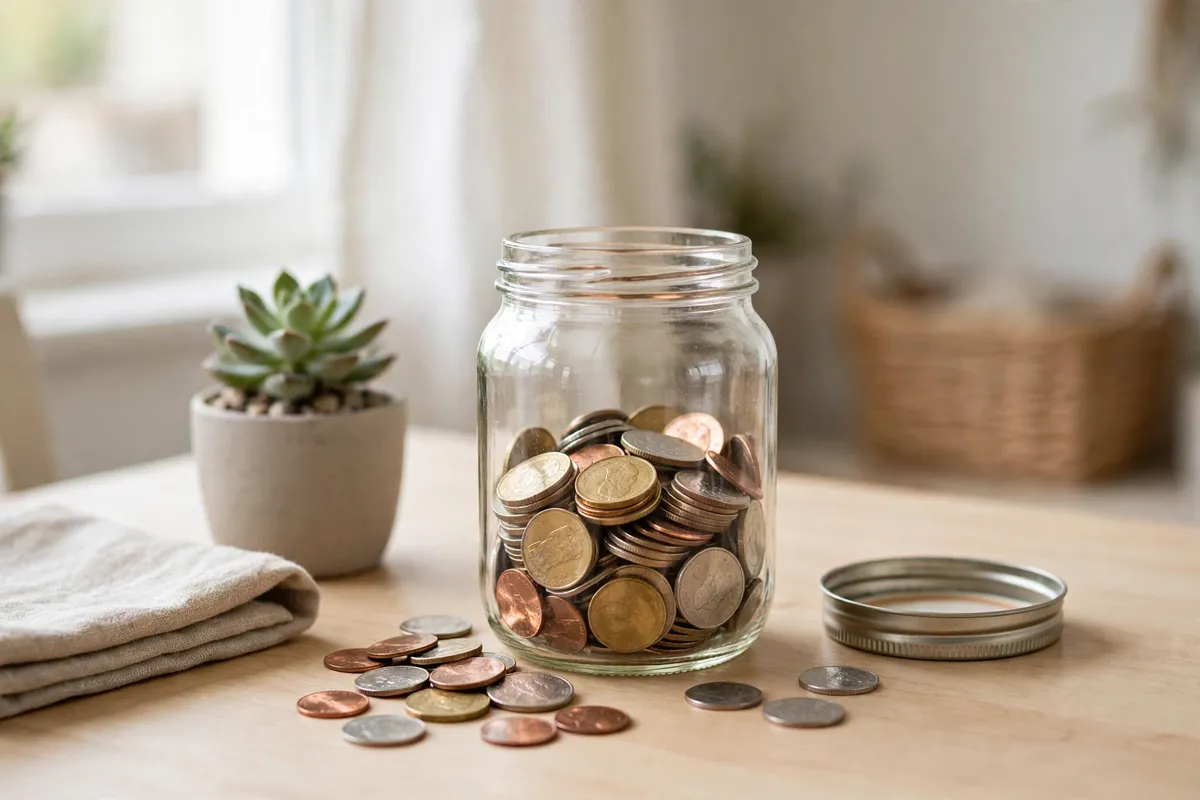
One small habit on its own will not change much. Kept up together, over time, they do. Together, over many months, they build a steady habit of care with money. Saving is many small acts, done again and again.
4. A Simple Saving System: Pay Yourself First, Automate, Review Monthly
Saving works a lot better when you have a simple system behind it. Without one, saving depends on willpower at the end of the month, when money is often gone.
Pay yourself first. Move money to savings as soon as money comes in, before you spend it on other things. Start with an amount that feels easy and fits your own income and costs. You can raise it later.
Automate. Set it up once, and let it happen on its own. Many banks let you set up an automatic transfer to savings on payday. If you cannot automate, move money on payday each month, and set a reminder.

Review monthly. Once a month, spend ten minutes on three questions: What came in? What went out? What will change next month? Keep what works and change what does not. If a strategy does not fit your home and budget, drop it and try another one.
A fair look: is the pay-yourself-first system right for you?
This is a fair look at the saving system described in Section 4 — moving money to savings as soon as money comes in, then reviewing once a month. It is judged here on three simple points: is it easy to start, is it easy to keep, and can it bend when money is tight?
What is good:
- It is easy to start. You set up one transfer or one payday reminder, and you start with an amount that feels easy.
- It does not rely on willpower at the end of the month, when money is often gone.
- The monthly review gives you a chance to keep what works and change what does not.
What to watch out for:
- If money is very tight in a given month, a fixed transfer can feel hard. In that case, make the amount smaller rather than giving up the habit.
- If your income changes from month to month, a set amount may not fit every month. A payday reminder to move money by hand can be a better fit than an automatic transfer.
- The system only helps if you check it. Without the monthly review, an amount that once fit your budget may stop fitting.
Who it suits:
- People with a regular payday who want a simple, steady habit.
- People who find it hard to save what is left over at month-end.
Who it may not suit as it stands:
- People whose income or bills change a lot each month. For them, the same idea still works, but the amount may need to change each month, and a manual payday move may work better than an automatic one.
Bottom line: this system is simple and flexible, not strict. Start small, keep the monthly check, and change the amount when your own bills and income change.
5. Saving Strategies That Sound Good but Usually Fail
Some strategies sound smart but fail in real life. Watch out for these.
Cutting everything at once. If you cut all fun and treats at once, life feels hard, and you may give up and spend more later. Cut a few things and build slowly.
Saving only what is left over. If you wait until month-end, there is often nothing left. That is why paying yourself first works better.
Chasing every deal. Buying things just because they are on sale is not saving. Ask first: Do I need this, and will I use it?
Copying someone else’s budget. A budget that works for another person may not work for you. Homes, incomes, and costs differ, so build your own plan around your own bills and amounts.
Setting a goal that is too big too fast. A very large goal can feel out of reach. A smaller goal you can reach builds trust in yourself.
6. Pick 3 Strategies and Start: A 30-Day Plan
You do not need to do everything in this guide. Pick three strategies and start with them.
Week 1: Look and list. List your bills and subscriptions, and cancel or pause what you no longer use. Note your main costs: housing, bills, food, and transport. Then pick your three strategies.
Week 2: Set up the system. Set up an automatic transfer to savings, or a payday reminder. Plan meals for the week, shop with a list, and start a small daily habit, like a coin jar.
Week 3: Keep going, and adjust. If one strategy feels too hard, make it smaller. A smaller step you keep is better than a big step you drop.
Week 4: Review and choose your next step. Do your monthly review, keep what worked, and choose one new strategy for next month, if you feel ready.
Final Thought
There is no single right way to save. The best plan is the one that fits your home, your income, and your daily life. The best ones fit your home, income, and life. Start with big costs, add easy habits, use a simple system, review monthly, and start with just three strategies.
This advice is based on the simple steps in this guide — starting with your biggest costs, adding habits you can keep, moving money to savings first, and checking once a month — rather than on any claim about a single person’s results. That order is why it can work better than cutting everything at once: a small, steady plan is easier to keep than a strict plan you give up. Before you decide, check your own bills, income, and any terms for your rent, home loan, or bank transfer, because plans and prices change and what fits one home may not fit another. This is general guidance, not advice for your own finances, so pick only the steps that fit your home and budget.
Frequently Asked Questions
What are the best money saving strategies for beginners?
Start simple: pay yourself first, list your bills, plan meals, shop with a list, and review your money monthly.
What are other ways to save money if my income is low?
Focus on what you can control: plan meals, cut unused subscriptions, use free local fun, and borrow for one-time use. Keep goals small and steady.
How can I save money without feeling deprived?
Keep some joy in your budget. Cut a few things, not everything, and plan treats you enjoy. A plan you can keep beats a strict plan you give up.
How often should I review my savings plan?
Once a month is enough. Check what came in, what went out, and what will change next month.
Is it better to save a little often, or a lot once in a while?
Saving a little often works better for most people. It builds a habit and is easier to keep, and an automatic transfer on payday helps.